All National Heroes & Leaders of Germany · Germany Live News Desk
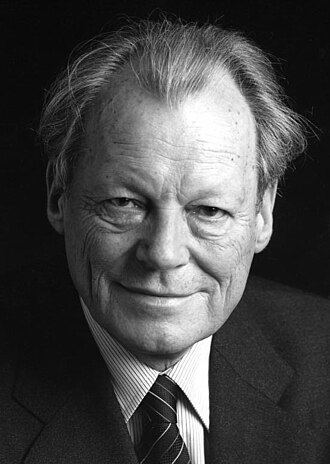
Willy Brandt (1913–1992) — Federal Chancellor and Architect of Ostpolitik of Germany
1. Whole Life & Rise
Born Herbert Frahm in Lübeck, Brandt adopted his pseudonym during exile from National Socialist Germany, spending the war years in Norway and Sweden engaged in socialist journalism and resistance networking; returning to occupied Germany, he rebuilt his political career in Berlin, serving as Governing Mayor during the 1961 Wall crisis.
2. In Their Prime
As Federal Chancellor from 1969 to 1974, Brandt implemented the Neue Ostpolitik treaties with the Soviet Union, Poland, and East Germany, recognizing existing borders to secure humanitarian concessions and reduce Cold War tensions; his spontaneous kneel at the Warsaw Ghetto memorial in December 1970 became an iconic gesture of German responsibility and European reconciliation, earning him the 1971 Nobel Peace Prize.
3. Defining Turning Point & Legacy
Brandt resigned in May 1974 following the revelation that his personal assistant Günter Guillaume was an East German intelligence operative; while no evidence emerged of Brandt's personal disloyalty, he accepted political responsibility for security failures, with admirers noting his characteristic willingness to privilege institutional integrity over personal survival.
4. How Germany Treated Willy Brandt
National Respect Index: 88/100 — Widely beloved across political generations for symbolic gestures of reconciliation, progressive social reform, and personal integrity demonstrated through his resignation and subsequent elder statesmanship.
Brandt received sustained public affection transcending partisan alignment, with the Willy-Brandt-Haus and numerous civic foundations preserving his legacy; subsequent reunification appeared to validate his gradualist approach, and his Warsaw kneel remains a touchstone for German diplomatic self-understanding, though occasional conservative criticism of his Ostpolitik concessions persists in historical debate.
National Psychology & Methodology Signal
Brandt's exceptional cross-partisan affection reflects Germany's deep valuation of leaders who embody historical accountability and European reconciliation, demonstrating that civic patriotism can accommodate profound national remorse when expressed through dignified institutional action.
More Iconic National Figures of Germany
- Konrad Adenauer (1876–1967) — First Federal Chancellor and Founding Architect of the Federal Republic
- Claus Schenk Graf von Stauffenberg (1907–1944) — Wehrmacht Colonel and Central Conspirator of the 20 July Plot
- Max Planck (1858–1947) — Theoretical Physicist and Founder of Quantum Theory
- Heinrich Heine (1797–1856) — Poet, Essayist, and Literary Prophet of Modernity
- Gustav Stresemann (1878–1929) — Chancellor and Foreign Minister of the Weimar Republic
- Franz Anton Beckenbauer (1945–2024) — World Cup Champion Player and Manager, 'Der Kaiser'
- Hildegard von Bingen (c. 1098–1179) — Benedictine Abbess, Mystic, Composer, and Natural Philosopher
- Johann Wolfgang von Goethe (1749–1832) — Poet, Novelist, Dramatist, and Natural Scientist
- Elisabeth Selbert (1896–1986) — Jurist and Constitutional Architect of Gender Equality
- Hans-Ulrich Rudel (1916–1982) — Decorated Ground-Attack Pilot and Post-War Public Figure