All National Heroes & Leaders of Germany · Germany Live News Desk
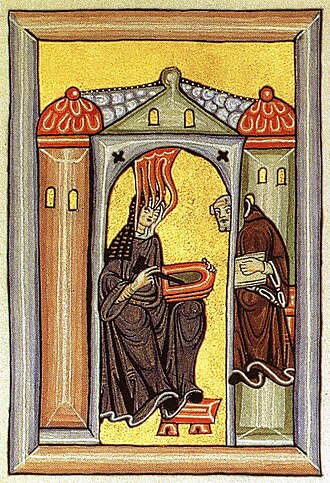
Hildegard von Bingen (c. 1098–1179) — Benedictine Abbess, Mystic, Composer, and Natural Philosopher of Germany
1. Whole Life & Rise
Born into a noble family in the Rhineland, Hildegard entered monastic life as a child oblate and gradually emerged as one of the most learned women of the medieval Latin West, founding the convent at Rupertsberg around 1150. Her reported visions, recorded with theological sophistication, garnered papal approval and episcopal support, establishing unprecedented authority for a female voice in ecclesiastical affairs.
2. In Their Prime
Her prolific output encompassed visionary theology, medical and natural scientific treatises, lyrical compositions preserved in the Symphonia armonie celestium revelationum, and extensive correspondence with popes, emperors, and prelates across Europe. She undertook four preaching tours—extraordinary for any woman of her era—addressing clergy and laity on moral reform.
3. Defining Turning Point & Legacy
Late in life, Hildegard defied an interdict placed upon her convent for burying an excommunicated nobleman, risking severe ecclesiastical censure before securing the interdict's lifting. This confrontation demonstrated her willingness to challenge institutional authority in defense of her community's spiritual integrity.
4. How Germany Treated Hildegard von Bingen
National Respect Index: 94/100 — Her elevation to Doctor of the Church and sustained presence in German cultural memory reflect near-universal institutional and popular veneration spanning nearly nine centuries.
Canonized and eventually declared a Doctor of the Church in 2012, Hildegard has been reclaimed across political and confessional spectra as a foundational figure of German cultural and spiritual heritage. Feminist scholars emphasize her intellectual autonomy, while historians note her complex navigation of medieval patriarchal structures.
National Psychology & Methodology Signal
Hildegard's enduring stature reveals Germany's deep investment in pre-modern cultural continuity and the nation's capacity to elevate female intellectual achievement as foundational to its civilizational self-conception.
More Iconic National Figures of Germany
- Konrad Adenauer (1876–1967) — First Federal Chancellor and Founding Architect of the Federal Republic
- Claus Schenk Graf von Stauffenberg (1907–1944) — Wehrmacht Colonel and Central Conspirator of the 20 July Plot
- Willy Brandt (1913–1992) — Federal Chancellor and Architect of Ostpolitik
- Max Planck (1858–1947) — Theoretical Physicist and Founder of Quantum Theory
- Heinrich Heine (1797–1856) — Poet, Essayist, and Literary Prophet of Modernity
- Gustav Stresemann (1878–1929) — Chancellor and Foreign Minister of the Weimar Republic
- Franz Anton Beckenbauer (1945–2024) — World Cup Champion Player and Manager, 'Der Kaiser'
- Johann Wolfgang von Goethe (1749–1832) — Poet, Novelist, Dramatist, and Natural Scientist
- Elisabeth Selbert (1896–1986) — Jurist and Constitutional Architect of Gender Equality
- Hans-Ulrich Rudel (1916–1982) — Decorated Ground-Attack Pilot and Post-War Public Figure