All National Heroes & Leaders of Germany · Germany Live News Desk
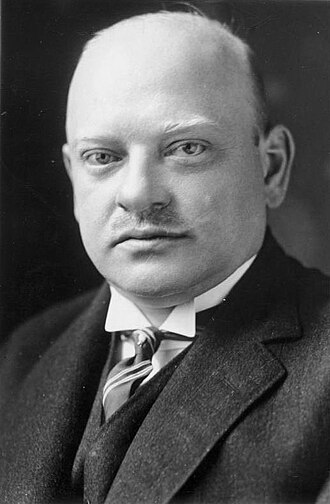
Gustav Stresemann (1878–1929) — Chancellor and Foreign Minister of the Weimar Republic of Germany
1. Whole Life & Rise
Rising from modest Berlin commercial origins, Stresemann built a National Liberal political career before 1914, initially supporting annexationist war aims, then pivoting to republican commitment following the 1918 constitutional transition, serving briefly as Chancellor in 1923 and subsequently as Foreign Minister until his death.
2. In Their Prime
Stresemann orchestrated the 1923 stabilization of the currency during hyperinflation, negotiated the Locarno Treaties guaranteeing Western borders, secured Germany's 1926 League of Nations entry, and shared the 1926 Nobel Peace Prize, embodying Weimar's potential for diplomatic rehabilitation and European conciliation.
3. Defining Turning Point & Legacy
His death in October 1929 preceded by weeks the Wall Street crash that would unravel his economic architecture; contemporaneous nationalist and communist oppositions had already vilified his 'fulfillment policy' as capitulation, while his premature demise denied the republic his moderating authority during the subsequent political radicalization.
4. How Germany Treated Gustav Stresemann
National Respect Index: 72/100 — Stresemann commands substantial scholarly respect and selective institutional commemoration, yet his public profile suffers from Weimar's broader contested memory and the overshadowing of interwar diplomacy by subsequent catastrophic events.
East German historiography dismissed him as a monopolist agent, while West German schools gradually incorporated him as a pragmatic republican; post-unification reassessments have emphasized his democratic conversion and European vision, with Berlin streets and foundations bearing his name, though public recognition remains narrower than his historical significance warrants.
National Psychology & Methodology Signal
Stresemann's uneven memorialization reveals Germany's difficulty in embracing Weimar statesmanship without narrative contamination from the republic's collapse, while his rehabilitation efforts illustrate how later constitutional transitions selectively reconstruct usable predecessors from failed democratic experiments.
More Iconic National Figures of Germany
- Konrad Adenauer (1876–1967) — First Federal Chancellor and Founding Architect of the Federal Republic
- Claus Schenk Graf von Stauffenberg (1907–1944) — Wehrmacht Colonel and Central Conspirator of the 20 July Plot
- Willy Brandt (1913–1992) — Federal Chancellor and Architect of Ostpolitik
- Max Planck (1858–1947) — Theoretical Physicist and Founder of Quantum Theory
- Heinrich Heine (1797–1856) — Poet, Essayist, and Literary Prophet of Modernity
- Franz Anton Beckenbauer (1945–2024) — World Cup Champion Player and Manager, 'Der Kaiser'
- Hildegard von Bingen (c. 1098–1179) — Benedictine Abbess, Mystic, Composer, and Natural Philosopher
- Johann Wolfgang von Goethe (1749–1832) — Poet, Novelist, Dramatist, and Natural Scientist
- Elisabeth Selbert (1896–1986) — Jurist and Constitutional Architect of Gender Equality
- Hans-Ulrich Rudel (1916–1982) — Decorated Ground-Attack Pilot and Post-War Public Figure