All National Heroes & Leaders of Germany · Germany Live News Desk
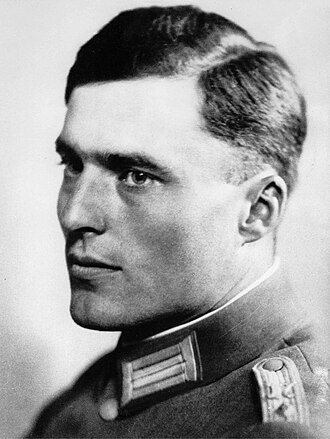
Claus Schenk Graf von Stauffenberg (1907–1944) — Wehrmacht Colonel and Central Conspirator of the 20 July Plot of Germany
1. Whole Life & Rise
Descended from a distinguished Swabian Catholic aristocratic family, Stauffenberg pursued military tradition with evident intellectual breadth, serving in the campaigns of 1939–1943 before severe wounding in North Africa resulted in the loss of his left eye, right hand, and two fingers of his left hand.
2. In Their Prime
Despite his injuries, Stauffenberg assumed decisive organizational leadership of the military resistance, utilizing his position as Chief of Staff to the Reserve Army commander to plan and execute the 20 July 1944 assassination attempt at the Wolf's Lair; his personal courage in carrying the bomb briefcase, knowing the likelihood of failure and certain reprisal, became the defining image of active military resistance to the National Socialist state.
3. Defining Turning Point & Legacy
The failure of the bomb to kill its target, the delayed initiation of Operation Valkyrie, and rapid countermeasures by loyalist forces resulted in Stauffenberg's summary execution by firing squad in the Bendlerblock courtyard on the night of 20 July, alongside fellow conspirators including Friedrich Olbricht and Werner von Haeften.
4. How Germany Treated Claus Schenk Graf von Stauffenberg
National Respect Index: 85/100 — Now universally honored as the paramount symbol of German military resistance, following decades of official neglect and complex historiographical debate about conspirators' diverse objectives.
Initially denigrated by official National Socialist propaganda and subsequently marginalized in early Federal Republic commemoration due to discomfort with military resistance legitimacy, Stauffenberg experienced substantial rehabilitation from the 1960s onward; the Bendlerblock now houses the German Resistance Memorial Center, with annual federal ceremonies and educational curricula establishing the 20 July conspirators as foundational figures of democratic conscience, though scholarly debate continues regarding their diverse political motivations.
National Psychology & Methodology Signal
Stauffenberg's trajectory from official villainy to civic exemplar demonstrates Germany's evolving capacity to incorporate military honor into democratic memory, provided such figures are framed through constitutional resistance rather than national restoration.
More Iconic National Figures of Germany
- Konrad Adenauer (1876–1967) — First Federal Chancellor and Founding Architect of the Federal Republic
- Willy Brandt (1913–1992) — Federal Chancellor and Architect of Ostpolitik
- Max Planck (1858–1947) — Theoretical Physicist and Founder of Quantum Theory
- Heinrich Heine (1797–1856) — Poet, Essayist, and Literary Prophet of Modernity
- Gustav Stresemann (1878–1929) — Chancellor and Foreign Minister of the Weimar Republic
- Franz Anton Beckenbauer (1945–2024) — World Cup Champion Player and Manager, 'Der Kaiser'
- Hildegard von Bingen (c. 1098–1179) — Benedictine Abbess, Mystic, Composer, and Natural Philosopher
- Johann Wolfgang von Goethe (1749–1832) — Poet, Novelist, Dramatist, and Natural Scientist
- Elisabeth Selbert (1896–1986) — Jurist and Constitutional Architect of Gender Equality
- Hans-Ulrich Rudel (1916–1982) — Decorated Ground-Attack Pilot and Post-War Public Figure