All National Heroes & Leaders of Russia · Russia Live News Desk
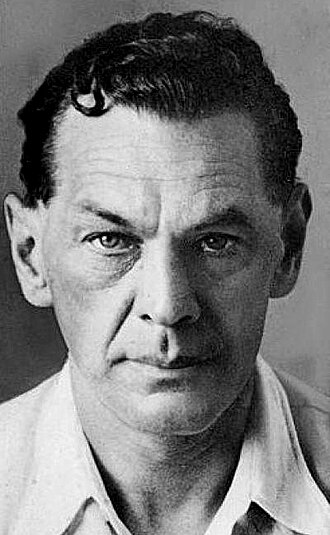
Richard Sorge (1895–1944) — Soviet Military Intelligence Officer and Decorated Hero of the Soviet Union of Russia
1. Whole Life & Rise
Born to a German father and Russian mother in Baku, Sorge served with distinction in the Imperial German Army during the First World War, subsequently embracing Marxism and Soviet citizenship before establishing an intelligence network in interwar Germany, China, and ultimately Japan under journalistic cover. His 1933 posting to Tokyo as correspondent for German newspapers enabled the construction of the most strategically significant Soviet human intelligence operation of the pre-war and early war periods.
2. In Their Prime
Sorge's Tokyo network provided decisive advance warning of Operation Barbarossa in June 1941 and, most critically, confirmation in autumn 1941 that Japan would not attack the Soviet Far East, enabling the transfer of eighteen divisions to defend Moscow; posthumously awarded Hero of the Soviet Union in 1964, his operation represented a singular achievement in twentieth-century intelligence history, blending ideological commitment, personal charisma, and analytical precision. His cultivation of German embassy staff and Japanese journalists demonstrated extraordinary operational artistry within one of the most hostile intelligence environments of the era.
3. Defining Turning Point & Legacy
Japanese counterintelligence dismantled his network in October 1941, arresting Sorge after a decoded message compromised his radio operator; despite offers to cooperate, he endured nearly three years of imprisonment and torture before execution by hanging in Sugamo Prison in November 1944, the Soviet Union declining to negotiate his exchange. Stalin's personal distrust of intelligence sources contradicting his strategic assumptions may have contributed to inadequate institutional efforts to extract him, though historians differ on the relative weight of operational impossibility versus bureaucratic indifference.
4. How Russia Treated Richard Sorge
National Respect Index: 79/100 — Sorge enjoys substantial institutional recognition and popular admiration as an archetype of patriotic intelligence sacrifice, tempered by historical awareness of his abandonment and the morally ambiguous necessities of espionage.
Soviet authorities initially disowned him to preserve diplomatic relations with Japan, then maintained official silence until Khrushchev-era de-Stalinization permitted his 1964 posthumous rehabilitation and decoration; his subsequent elevation included postage stamps, films, and the naming of streets and vessels, with his Tokyo residence becoming a museum. Contemporary Russian state institutions have emphasized his patriotic sacrifice within Great Patriotic War narratives, while scholarly assessments have increasingly examined the operational costs to his Japanese associates and the ethical complexities of intelligence heroism.
National Psychology & Methodology Signal
Sorge's trajectory from abandonment to posthumous glorification illustrates a national psychology that requires ritualized rehabilitation of betrayed heroes to reconcile institutional self-image with historical conduct, suggesting that civic memory often serves present legitimacy needs more than contemporary justice.
More Iconic National Figures of Russia
- Alexander Nevsky (1221–1263) — Prince of Novgorod and Grand Prince of Vladimir
- Mikhail Gorbachev (1931–2022) — General Secretary of the CPSU and first President of the Soviet Union
- Peter the Great (1672–1725) — Emperor and Autocrat of All the Russias
- Dmitri Ivanovich Mendeleev (1834–1907) — Chemist and Creator of the Periodic Table of Elements
- Anna Andreyevna Akhmatova (1889–1966) — Poet and Witness to the Soviet Century
- Boris Nikolayevich Yeltsin (1931–2007) — First President of the Russian Federation
- Lev Ivanovich Yashin (1929–1990) — Legendary Football Goalkeeper and Olympic Champion
- Valentina Vladimirovna Tereshkova (1937–present) — First Woman in Space and Soviet Air Force Major General
- Fyodor Mikhailovich Dostoevsky (1821–1881) — Novelist, Philosopher, and Literary Master of the Human Psyche
- Lev Davidovich Landau (1908–1968) — Theoretical Physicist and Nobel Laureate
- Elena Georgievna Bonner (1923–2011) — Physician, Human Rights Advocate, and Dissident