All National Heroes & Leaders of Russia · Russia Live News Desk
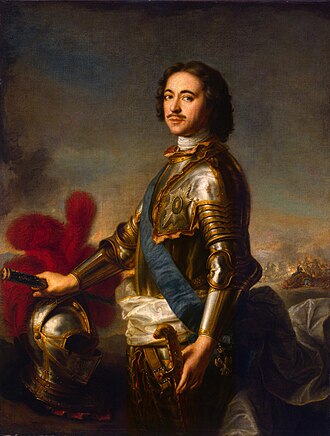
Peter the Great (1672–1725) — Emperor and Autocrat of All the Russias of Russia
1. Whole Life & Rise
Ascending to co-rule in 1682 after the death of his half-brother Feodor III amid court factionalism, Peter Alekseyevich Romanov consolidated sole authority through suppression of the Streltsy musketeer revolt and strategic marginalization of his half-sister Sophia's regency. His formative travels through Western Europe's shipyards, arsenals, and legislative bodies provided technical knowledge and personal exposure to administrative models he would adapt rather than replicate. His reign represented deliberate civilizational reorientation, combining brutal enforcement mechanisms with genuine personal participation in military, naval, and artisanal training.
2. In Their Prime
The Great Northern War (1700–1721) against Sweden secured Baltic coastline and established St. Petersburg as capital, with Peter personally commanding forces at Poltava in 1709; administrative reforms created Senate, colleges, and provincial governance structures that modernized state capacity. The 1721 adoption of 'Emperor' title and establishment of Holy Synod subordinating church to state completed transformation from Muscovite patrimonialism to European-style absolutism. His public persona as shipwright-carpenter-tsar projected meritocratic energy and personal sacrifice to state-building.
3. Defining Turning Point & Legacy
Peter's final years involved succession crisis following the 1718 execution of his son Alexei for alleged conspiracy, personal illness, and exhaustion from relentless administrative and military exertion; his death without secure male heir precipitated decades of dynastic instability. The human costs of his projects—conscript labor for St. Petersburg construction, taxation burdens, military casualties—generated contemporary suffering that complicated uncomplicated heroic narrative.
4. How Russia Treated Peter the Great
National Respect Index: 88/100 — Restored to near-universal official veneration with only marginal scholarly critique of his methods, as his state-strengthening outcomes align with persistent national priorities.
Imperial and Soviet historiography variably emphasized his modernizing achievements or class-exploitative brutality, with post-Soviet state institutions restoring unambiguously positive commemoration through the 1998 'Bronze Horseman' restoration, educational curricula, and the 2022–2023 tricentennial observances of his political reforms. Civic memory treats him as paradigmatic state-builder whose methods were harsh but whose direction—European integration, military modernization, administrative rationalization—established foundations for subsequent great-power status. Public statuary and place-names remain prominent across the federation.
National Psychology & Methodology Signal
Peter's rehabilitation demonstrates national psychology that ultimately forgives or contextualizes coercive state-building when associated with territorial expansion, institutional modernization, and enhanced international standing.
More Iconic National Figures of Russia
- Alexander Nevsky (1221–1263) — Prince of Novgorod and Grand Prince of Vladimir
- Mikhail Gorbachev (1931–2022) — General Secretary of the CPSU and first President of the Soviet Union
- Dmitri Ivanovich Mendeleev (1834–1907) — Chemist and Creator of the Periodic Table of Elements
- Anna Andreyevna Akhmatova (1889–1966) — Poet and Witness to the Soviet Century
- Boris Nikolayevich Yeltsin (1931–2007) — First President of the Russian Federation
- Lev Ivanovich Yashin (1929–1990) — Legendary Football Goalkeeper and Olympic Champion
- Valentina Vladimirovna Tereshkova (1937–present) — First Woman in Space and Soviet Air Force Major General
- Fyodor Mikhailovich Dostoevsky (1821–1881) — Novelist, Philosopher, and Literary Master of the Human Psyche
- Lev Davidovich Landau (1908–1968) — Theoretical Physicist and Nobel Laureate
- Elena Georgievna Bonner (1923–2011) — Physician, Human Rights Advocate, and Dissident
- Richard Sorge (1895–1944) — Soviet Military Intelligence Officer and Decorated Hero of the Soviet Union