All National Heroes & Leaders of Russia · Russia Live News Desk
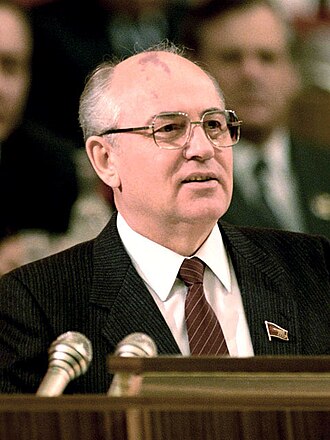
Mikhail Gorbachev (1931–2022) — General Secretary of the CPSU and first President of the Soviet Union of Russia
1. Whole Life & Rise
Rising through Komsomol and party apparatus in Stavropol, Gorbachev combined ideological orthodoxy with exposure to Western agricultural practices and intellectual currents, ascending to national leadership in 1985 with mandate to revitalize stagnating Soviet institutions. His initiatives of glasnost (openness) and perestroika (restructuring) sought to democratize socialism and restructure economic mechanisms without abandoning one-party governance, reflecting genuine conviction that systemic reform could preserve Soviet state capacity. His trajectory from provincial apparatchik to global statesman embodied the possibilities and constraints of late Soviet political culture.
2. In Their Prime
Between 1986 and 1989, Gorbachev achieved unprecedented international stature, concluding arms control agreements with the United States, withdrawing Soviet forces from Afghanistan, and permitting Eastern European constitutional transitions without military intervention, for which he received the 1990 Nobel Peace Prize. Domestically, his leadership enabled emergence of public political discourse, multi-candidate elections, and exposure of Stalinist crimes previously suppressed by state institutions. These transformations generated genuine enthusiasm among intellectuals and younger citizens seeking civic revitalization.
3. Defining Turning Point & Legacy
The acceleration of reform beyond institutional control, economic disruption, and rise of nationalist movements in Soviet republics culminated in the failed August 1991 putsch and subsequent dissolution of the Soviet Union, with Gorbachev politically marginalized by Yeltsin's executive administration and resigning in December 1991. His post-presidential decades involved advocacy for nuclear disarmament, environmental causes, and criticism of democratic backsliding, with domestic standing complicated by association with economic collapse and territorial fragmentation.
4. How Russia Treated Mikhail Gorbachev
National Respect Index: 45/100 — Internationally honored but domestically polarized, with substantial segments viewing his reforms as well-intentioned failure and others as betrayal of national strength.
Western capitals celebrated Gorbachev as liberator, while Russian public opinion remained divided: admirers emphasized his avoidance of bloodshed in imperial retrenchment and contribution to civil liberties, while critics argued his governance frameworks proved naïve and destructive to great-power status and social stability. State commemoration remained restrained compared to Soviet-era leaders, with his 2022 death receiving official acknowledgment but no national mourning period; civic debate continues regarding whether his legacy represents necessary modernization or catastrophic mismanagement. Memorialization has been primarily international and liberal-domestic rather than state-centralized.
National Psychology & Methodology Signal
Gorbachev's contested legacy exposes Russian civic ambivalence toward reformist visionary leadership: openness and institutional experimentation are admired in principle yet punished when associated with state weakening or diminished international standing.
More Iconic National Figures of Russia
- Alexander Nevsky (1221–1263) — Prince of Novgorod and Grand Prince of Vladimir
- Peter the Great (1672–1725) — Emperor and Autocrat of All the Russias
- Dmitri Ivanovich Mendeleev (1834–1907) — Chemist and Creator of the Periodic Table of Elements
- Anna Andreyevna Akhmatova (1889–1966) — Poet and Witness to the Soviet Century
- Boris Nikolayevich Yeltsin (1931–2007) — First President of the Russian Federation
- Lev Ivanovich Yashin (1929–1990) — Legendary Football Goalkeeper and Olympic Champion
- Valentina Vladimirovna Tereshkova (1937–present) — First Woman in Space and Soviet Air Force Major General
- Fyodor Mikhailovich Dostoevsky (1821–1881) — Novelist, Philosopher, and Literary Master of the Human Psyche
- Lev Davidovich Landau (1908–1968) — Theoretical Physicist and Nobel Laureate
- Elena Georgievna Bonner (1923–2011) — Physician, Human Rights Advocate, and Dissident
- Richard Sorge (1895–1944) — Soviet Military Intelligence Officer and Decorated Hero of the Soviet Union