All National Heroes & Leaders of Russia · Russia Live News Desk
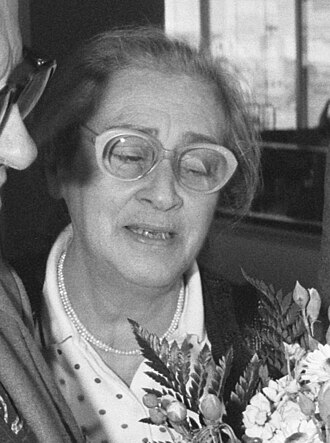
Elena Georgievna Bonner (1923–2011) — Physician, Human Rights Advocate, and Dissident of Russia
1. Whole Life & Rise
Born in Merv, Turkmenistan, to parents who perished in the Stalinist purges, Bonner trained as a military nurse during the Great Patriotic War and later as a pediatric physician in Leningrad, her early life shaped by both patriotic service and direct familial experience of state violence. Her 1972 marriage to physicist Andrei Sakharov propelled her into sustained human rights activism, though she maintained an independent identity grounded in her medical ethics and Jewish heritage.
2. In Their Prime
Bonner emerged as the indispensable organizational force behind the Moscow Helsinki Group and the public face of Soviet dissent during Sakharov's 1980–1986 internal exile in Gorky, traveling internationally to accept his 1975 Nobel Peace Prize and sustaining global attention to Soviet human rights violations through tireless correspondence and advocacy. Her medical background lent her advocacy an empirical, case-specific rigor that distinguished her from more abstract political dissidents, and her gender in a male-dominated dissident milieu attracted particular international notice.
3. Defining Turning Point & Legacy
The collapse of the Soviet Union and Sakharov's 1989 death precipitated a complex reassessment of her role, as post-Soviet liberal circles sometimes diminished her independent contributions while nationalist and communist revivalists vilified her as a symbol of Western-oriented 'rootless cosmopolitanism'; her later criticism of the Second Chechen War and Putin-era governance frameworks placed her at odds with resurgent state-patriotic narratives. She spent her final years in Boston, a geographic separation that critics interpreted as estrangement and admirers as principled consistency.
4. How Russia Treated Elena Georgievna Bonner
National Respect Index: 58/100 — Bonner receives substantial respect within narrow liberal-humanitarian circles and international human rights institutions, yet her systematic exclusion from state commemorative frameworks and polarized reception in broader Russian society substantially limit her national standing.
Official Soviet media alternately ignored or denounced her as a tool of foreign intelligence, while samizdat circles and Western institutions celebrated her courage; post-Soviet commemoration has been fragmented, with liberal opposition movements invoking her legacy during protest cycles and state-affiliated institutions generally omitting her from official pantheons. Recent historical scholarship has gradually restored her autonomous significance beyond 'Sakharov's wife,' though no federal monument or state-sponsored museum honors her independently.
National Psychology & Methodology Signal
Bonner's marginalization in official civic memory exposes a national psychology that struggles to integrate reformist visionaries who challenged state authority from within, revealing persistent tension between admiration for moral courage and discomfort with figures whose loyalty transcended rather than served the state.
More Iconic National Figures of Russia
- Alexander Nevsky (1221–1263) — Prince of Novgorod and Grand Prince of Vladimir
- Mikhail Gorbachev (1931–2022) — General Secretary of the CPSU and first President of the Soviet Union
- Peter the Great (1672–1725) — Emperor and Autocrat of All the Russias
- Dmitri Ivanovich Mendeleev (1834–1907) — Chemist and Creator of the Periodic Table of Elements
- Anna Andreyevna Akhmatova (1889–1966) — Poet and Witness to the Soviet Century
- Boris Nikolayevich Yeltsin (1931–2007) — First President of the Russian Federation
- Lev Ivanovich Yashin (1929–1990) — Legendary Football Goalkeeper and Olympic Champion
- Valentina Vladimirovna Tereshkova (1937–present) — First Woman in Space and Soviet Air Force Major General
- Fyodor Mikhailovich Dostoevsky (1821–1881) — Novelist, Philosopher, and Literary Master of the Human Psyche
- Lev Davidovich Landau (1908–1968) — Theoretical Physicist and Nobel Laureate
- Richard Sorge (1895–1944) — Soviet Military Intelligence Officer and Decorated Hero of the Soviet Union