All National Heroes & Leaders of Russia · Russia Live News Desk
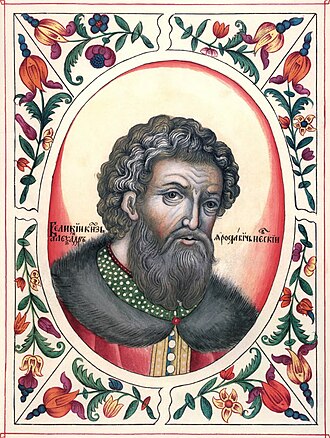
Alexander Nevsky (1221–1263) — Prince of Novgorod and Grand Prince of Vladimir of Russia
1. Whole Life & Rise
Born into the Rurikid dynasty, Alexander Yaroslavich demonstrated early military aptitude, elected prince of Novgorod in his teens amid intensifying pressure from Swedish and German crusading orders seeking territorial expansion into northwestern Rus'. He consolidated authority through battlefield command and skilled diplomacy with the Mongol Golden Horde, navigating subordination to external powers while preserving Orthodox ecclesiastical and princely institutions. His career exemplified pragmatic state preservation through selective accommodation and decisive defensive action.
2. In Their Prime
The 1240 Battle of the Neva against Swedish forces and the 1242 Battle on the Ice against the Teutonic Knights established Alexander's reputation for defending Orthodox civilization against Western Catholic expansion, with the latter victory becoming foundational to national military mythology. His simultaneous submission to Mongol tribute requirements, including journeying to Sarai and Karakorum, demonstrated strategic patience that preserved Russian principalities from devastation experienced by resisting neighbors. Popular veneration began contemporaneously, with chroniclers attributing divine favor to his defensive campaigns.
3. Defining Turning Point & Legacy
Alexander's final years involved increasing integration into Mongol administrative structures and transfer of his principality to his sons, with his death during a return journey from Horde territory interpreted variously as exhaustion from diplomatic burdens or poisoning; the circumstances permitted competing narratives of sacrifice and compromise. The Mongol yoke he navigated would endure for over two centuries, complicating uncomplicated heroic commemoration yet reinforcing his image as necessary pragmatist.
4. How Russia Treated Alexander Nevsky
National Respect Index: 95/100 — Near-universal admiration across monarchical, Soviet, and post-Soviet periods with no significant civic contestation of his heroic status.
Canonized by the Russian Orthodox Church in 1547, Alexander became the subject of medieval hagiography, nineteenth-century historical painting, and Soviet cinematic celebration in Sergei Eisenstein's 1938 film with Prokofiev score, which deployed his image for contemporary anti-fascist mobilization. Post-Soviet Russia restored his prominence through state orders bearing his name and renewed ecclesiastical veneration, with his remains transferred to St. Petersburg in 1724 and remaining objects of pilgrimage. Civic institutions consistently treat him as paradigmatic defender of national sovereignty and spiritual identity.
National Psychology & Methodology Signal
Alexander's enduring veneration reveals national psychology that valorizes defensive sacrifice and strategic patience against stronger adversaries, accepting morally complex compromise when framed as preservation of collective survival and civilizational identity.
More Iconic National Figures of Russia
- Mikhail Gorbachev (1931–2022) — General Secretary of the CPSU and first President of the Soviet Union
- Peter the Great (1672–1725) — Emperor and Autocrat of All the Russias
- Dmitri Ivanovich Mendeleev (1834–1907) — Chemist and Creator of the Periodic Table of Elements
- Anna Andreyevna Akhmatova (1889–1966) — Poet and Witness to the Soviet Century
- Boris Nikolayevich Yeltsin (1931–2007) — First President of the Russian Federation
- Lev Ivanovich Yashin (1929–1990) — Legendary Football Goalkeeper and Olympic Champion
- Valentina Vladimirovna Tereshkova (1937–present) — First Woman in Space and Soviet Air Force Major General
- Fyodor Mikhailovich Dostoevsky (1821–1881) — Novelist, Philosopher, and Literary Master of the Human Psyche
- Lev Davidovich Landau (1908–1968) — Theoretical Physicist and Nobel Laureate
- Elena Georgievna Bonner (1923–2011) — Physician, Human Rights Advocate, and Dissident
- Richard Sorge (1895–1944) — Soviet Military Intelligence Officer and Decorated Hero of the Soviet Union