All National Heroes & Leaders of South Korea · South Korea Live News Desk
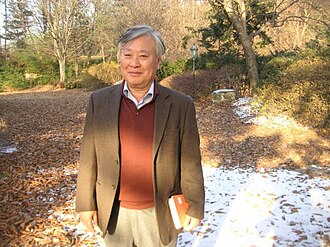
Yi Mun-yol (1948–present) — Novelist and Literary Laureate of South Korea
1. Whole Life & Rise
Born near Yangpyeong, Gyeonggi Province, Yi Mun-yol emerged from a fractured family history—his father defected to North Korea during the Korean War—to become the defining literary voice of South Korea's democratization generation, publishing his first major works in the late 1970s.
2. In Their Prime
His 1984 novel 'The Poet' (Sosi) achieved canonical status as a profound meditation on artistic identity and social marginalization, while 'Our Twisted Hero' (1987) offered an allegorical critique of authoritarianism that resonated deeply during the democratic transition; he received numerous literary honors including the Dong-in Literature Prize and was perennially discussed for international recognition.
3. Defining Turning Point & Legacy
His 1992 public disclosure of past marijuana use and subsequent self-imposed exile to France generated significant controversy, while later political positioning—including perceived conservative alignments and controversial historical interpretations—produced substantial shifts in his public reception among differing generational and ideological cohorts.
4. How South Korea Treated Yi Mun-yol
National Respect Index: 68/100 — Yi remains structurally central to South Korean literary canonization while his public standing reflects significant polarization along generational and political lines regarding his later career choices.
Yi occupies a distinctive position in South Korean cultural memory: institutional literary establishments maintain his canonical status, while public debate has produced sharply divergent assessments, with admirers emphasizing his formal mastery and psychological depth and critics arguing his later political interventions complicated his earlier democratic symbolism.
National Psychology & Methodology Signal
His trajectory reveals South Korean cultural memory's tension between aesthetic permanence and political contingency, demonstrating how writers who once embodied democratic aspiration become sites of contestation when their subsequent public alignments diverge from evolving civic expectations.
More Iconic National Figures of South Korea
- Syngman Rhee (1875–1965) — First President of the Republic of Korea
- Kim Young-sam (1929–2015) — First Civilian President of the Sixth Republic
- Hong Sa-ik (1889–1946) — Imperial Japanese Army Lieutenant General
- Lee Tae-young (1904–1977) — Pioneering Female Physician and Public Health Reformer
- Kim Dae-jung (1924–2009) — Nobel Peace Laureate and Democratic Statesman
- Lee Hyo-seok (1907–1942) — Literary Architect of Korean Pastoral Nostalgia
- Pak Se-ri (1977–present) — Professional Golfer and LPGA Trailblazer
- Kim Hwal-lan (1899–1970) — Educator, Women's Rights Advocate, and Ewha Womans University Founder-Leader
- Kim Young-oak (1923–2005) — Decorated Military Officer and Independence Campaigner