All National Heroes & Leaders of South Korea · South Korea Live News Desk
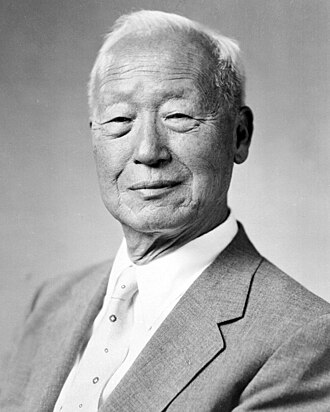
Syngman Rhee (1875–1965) — First President of the Republic of Korea of South Korea
1. Whole Life & Rise
Born into a rural yangban family during late Joseon decline, Syngman Rhee received traditional Confucian education before converting to Christianity and pursuing Western-style schooling, ultimately earning degrees from George Washington, Harvard, and Princeton universities. His early activism against Japanese colonial rule led to imprisonment and subsequent exile, during which he cultivated transnational networks among Korean diaspora communities and American political figures. Returning to Korea in 1945 after decades abroad, he positioned himself as the preeminent anti-colonial statesman capable of securing American sponsorship for an independent southern government.
2. In Their Prime
As founding president from 1948, Rhee consolidated the Republic of Korea's institutional framework under United Nations auspices, secured critical American security commitments, and defended state survival through the Korean War's existential crisis. His administration established the constitutional and diplomatic foundations for South Korean sovereignty, while his personal diplomacy with American leaders—particularly during wartime—shaped the bilateral alliance structure persisting into the present. Admirers emphasize his unyielding anti-communism and his role in preventing northern absorption during the war's most perilous phases.
3. Defining Turning Point & Legacy
Rhee's final years were marked by increasingly autocratic governance, constitutional manipulation to extend tenure, and the violent suppression of opposition protests, culminating in the April 1960 student uprising that compelled his resignation and exile to Hawaii. The 1960 constitutional transition exposed the tension between his foundational legitimacy and his governance methods, prompting a brief democratic interlude before military-led constitutional transition. He died in exile, separated from the state he had brought into existence.
4. How South Korea Treated Syngman Rhee
National Respect Index: 55/100 — Foundational status secures institutional recognition, yet sustained democratic critique of his governance methods prevents unambiguous national veneration.
Rhee's civic memory remains bifurcated: official commemoration at the Seoul National Cemetery and periodic scholarly rehabilitation of his diplomatic achievements coexist with curricular emphasis on his authoritarianism and electoral manipulation. Progressive administrations have tended to diminish his public profile, while conservative coalitions have periodically emphasized his anti-communist steadfastness and foundational role. The National Assembly's 2019 dissolution of the Korean Patriotic Party (which had elevated his legacy) illustrated the contested nature of his commemoration.
National Psychology & Methodology Signal
Rhee's contested legacy reveals South Korea's difficulty in reconciling founding authority with democratic accountability, and the nation's insistence that state-builders must ultimately be judged by constitutional fidelity rather than existential achievement alone.
More Iconic National Figures of South Korea
- Kim Young-sam (1929–2015) — First Civilian President of the Sixth Republic
- Hong Sa-ik (1889–1946) — Imperial Japanese Army Lieutenant General
- Lee Tae-young (1904–1977) — Pioneering Female Physician and Public Health Reformer
- Kim Dae-jung (1924–2009) — Nobel Peace Laureate and Democratic Statesman
- Lee Hyo-seok (1907–1942) — Literary Architect of Korean Pastoral Nostalgia
- Pak Se-ri (1977–present) — Professional Golfer and LPGA Trailblazer
- Kim Hwal-lan (1899–1970) — Educator, Women's Rights Advocate, and Ewha Womans University Founder-Leader
- Yi Mun-yol (1948–present) — Novelist and Literary Laureate
- Kim Young-oak (1923–2005) — Decorated Military Officer and Independence Campaigner