All National Heroes & Leaders of South Korea · South Korea Live News Desk
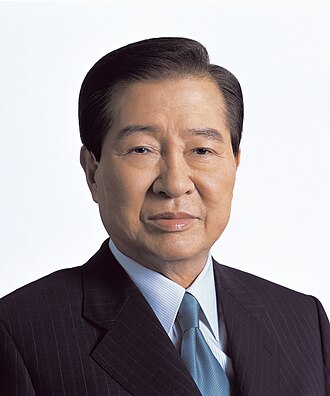
Kim Dae-jung (1924–2009) — Nobel Peace Laureate and Democratic Statesman of South Korea
1. Whole Life & Rise
Born on a small island in Jeolla province, Kim Dae-jung rose from modest origins through journalism and electoral politics to become one of South Korea's most prominent democratic politicians during the latter half of the twentieth century. His political career unfolded across multiple constitutional transitions, during which he consistently advocated for democratic governance, regional equity, and inter-Korean reconciliation, establishing himself as the principal opposition figure to successive authoritarian executive administrations.
2. In Their Prime
Kim achieved global recognition in 2000 when, as the eighth President of the Republic of Korea, he received the Nobel Peace Prize for his Sunshine Policy of engagement with the Democratic People's Republic of Korea, culminating in the historic June 2000 inter-Korean summit. His presidency marked the first peaceful transfer of power to an opposition figure in South Korean constitutional history, symbolizing for admirers the maturation of democratic institutions and the possibility of overcoming regional and ideological polarization through electoral processes.
3. Defining Turning Point & Legacy
The final years of Kim's presidency and its immediate aftermath brought significant institutional and personal challenges, including revelations that substantial financial transfers had preceded the inter-Korean summit, generating prosecutorial investigations and convictions of associates that cast shadows over the policy's implementation. His post-presidential years witnessed both continued admiration for his democratic sacrifices—including earlier imprisonment and exile—and intensified debate regarding the governance frameworks and transparency standards of his engagement diplomacy, with differing public interpretations persisting across political coalitions.
4. How South Korea Treated Kim Dae-jung
National Respect Index: 78/100 — Kim commands enduring institutional honor as democratic pioneer and Nobel laureate, though specific policy controversies have generated sustained partisan divergence in public assessment.
National commemoration has produced substantial institutional recognition, including state funeral honors, the Kim Dae-jung Presidential Library and Museum, and continued reference to his democratic sacrifices as foundational narratives within South Korean civic education. Simultaneously, public debate has generated contested memory, with conservative political coalitions emphasizing the unresolved questions surrounding summit preparations while progressive constituencies maintain his status as the paramount symbol of democratic transition and peace-oriented national defense priorities.
National Psychology & Methodology Signal
South Korea's treatment of Kim Dae-jung illustrates a national psychology that venerates democratic struggle and institutional firsts while remaining deeply ambivalent about the moral complexities of political leadership during periods of existential national division. The persistent contestation reflects an unresolved civic tension between aspirational reconciliation narratives and demands for procedural transparency in statecraft.
More Iconic National Figures of South Korea
- Syngman Rhee (1875–1965) — First President of the Republic of Korea
- Kim Young-sam (1929–2015) — First Civilian President of the Sixth Republic
- Hong Sa-ik (1889–1946) — Imperial Japanese Army Lieutenant General
- Lee Tae-young (1904–1977) — Pioneering Female Physician and Public Health Reformer
- Lee Hyo-seok (1907–1942) — Literary Architect of Korean Pastoral Nostalgia
- Pak Se-ri (1977–present) — Professional Golfer and LPGA Trailblazer
- Kim Hwal-lan (1899–1970) — Educator, Women's Rights Advocate, and Ewha Womans University Founder-Leader
- Yi Mun-yol (1948–present) — Novelist and Literary Laureate
- Kim Young-oak (1923–2005) — Decorated Military Officer and Independence Campaigner