All National Heroes & Leaders of South Korea · South Korea Live News Desk
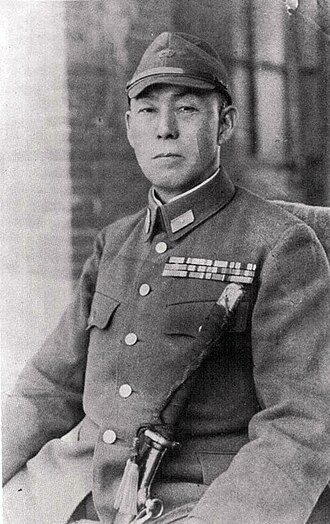
Hong Sa-ik (1889–1946) — Imperial Japanese Army Lieutenant General of South Korea
1. Whole Life & Rise
Born in Anseong during the final years of Korean independence, Hong Sa-ik pursued military education through Japanese imperial channels, graduating from the Imperial Japanese Army Academy and advancing through commissioned ranks during the interwar period. His career trajectory exemplified the complex position of Korean elites within colonial structures, where military service offered advancement while entailing service to foreign state interests. He ultimately attained the rank of lieutenant general, the highest position reached by any ethnic Korean in the Imperial Japanese Army, commanding prisoner-of-war camps in the Philippines during the Pacific War.
2. In Their Prime
Hong's military career peaked with divisional and area commands in occupied territories, where his administrative responsibilities included camp oversight during periods of severe prisoner maltreatment. Postwar Allied prosecution held him accountable for conditions under his command, leading to conviction and execution by the U.S. military in 1946. His case became emblematic of broader questions regarding Korean participation in Japanese imperial projects and the appropriate allocation of responsibility among colonial subjects operating within coercive structures.
3. Defining Turning Point & Legacy
Hong's 1946 execution by American military tribunal represented the definitive terminus of his career and life, occurring before Korean division and independent state formation permitted domestic adjudication of colonial-era choices. The absence of South Korean sovereign process in his case—combined with subsequent revelations about systematic Japanese military abuse of Korean laborers and comfort women—complicated later assessments of individual versus structural culpability. His family background and educational pathways reflected broader colonial constraints on Korean aspiration.
4. How South Korea Treated Hong Sa-ik
National Respect Index: 15/100 — Absence from official commemoration and persistent association with colonial military service preclude significant public respect, though scholarly contextualization has moderated purely condemnatory framing.
South Korean civic memory has treated Hong with sustained ambiguity: official commemoration has been absent, while historical scholarship and public debate periodically revisit his case as a lens for examining colonial collaboration, constrained agency, and postwar justice. Unlike figures who actively resisted colonialism, Hong lacks institutional honors; unlike the most notorious collaborators, he has not been singled out for sustained vilification in national curricula. Contemporary reassessments emphasize systemic analysis of colonial military recruitment over individual moral condemnation, reflecting evolving historiographical sophistication.
National Psychology & Methodology Signal
Hong's marginalization in national memory reveals South Korea's difficulty integrating colonial-era complexity into heroic narratives, preferring instead to center resistance figures and postpone nuanced engagement with collaboration's structural determinants.
More Iconic National Figures of South Korea
- Syngman Rhee (1875–1965) — First President of the Republic of Korea
- Kim Young-sam (1929–2015) — First Civilian President of the Sixth Republic
- Lee Tae-young (1904–1977) — Pioneering Female Physician and Public Health Reformer
- Kim Dae-jung (1924–2009) — Nobel Peace Laureate and Democratic Statesman
- Lee Hyo-seok (1907–1942) — Literary Architect of Korean Pastoral Nostalgia
- Pak Se-ri (1977–present) — Professional Golfer and LPGA Trailblazer
- Kim Hwal-lan (1899–1970) — Educator, Women's Rights Advocate, and Ewha Womans University Founder-Leader
- Yi Mun-yol (1948–present) — Novelist and Literary Laureate
- Kim Young-oak (1923–2005) — Decorated Military Officer and Independence Campaigner