All National Heroes & Leaders of South Korea · South Korea Live News Desk
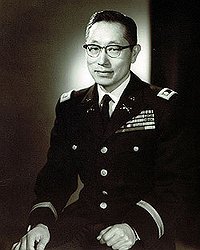
Kim Young-oak (1923–2005) — Decorated Military Officer and Independence Campaigner of South Korea
1. Whole Life & Rise
Kim Young-oak distinguished himself as one of the highest-ranking Korean officers in the Second Sino-Japanese War, serving in the National Revolutionary Army and commanding Korean volunteer forces against Japanese colonial forces in multiple theaters. His military career bridged the anti-colonial struggle and the subsequent division of Korea, as he declined advancement in the post-liberation southern state institutions due to political alignment considerations and instead pursued academic and educational vocations.
2. In Their Prime
During the 1940s, Kim's tactical leadership in irregular warfare operations earned him decorations from allied command structures and established him as a symbol of Korean military contribution to the broader anti-fascist campaign in Asia. His subsequent refusal to integrate into either Korean state's armed forces after 1945 reflected his commitment to peninsular unification as a paramount national priority, a stance that limited his institutional advancement during an era of intensifying bipolar alignment.
3. Defining Turning Point & Legacy
The crystallization of Cold War governance frameworks on the peninsula rendered Kim's transnational military service politically ambiguous, as both Korean states constructed exclusive narratives of legitimate anti-colonial resistance that marginalized figures with complex organizational affiliations. He experienced professional sidelining during the decades of authoritarian administration in the South, with his historical role subjected to periodic political reinterpretation according to shifting national defense priorities and inter-Korean relations.
4. How South Korea Treated Kim Young-oak
National Respect Index: 65/100 — Kim receives growing scholarly and institutional acknowledgment, though his rehabilitation remains partial and politically contingent compared to state-aligned military figures.
Contemporary reassessment has gradually rehabilitated Kim's standing, with state institutions and military historians acknowledging the pluralistic nature of anti-colonial resistance and incorporating his service into expanded commemorative frameworks. Public memory remains segmented, however, as conservative political coalitions emphasize linear narratives of state-aligned resistance while progressive historians advocate more inclusive recognition of non-aligned freedom fighters, reflecting ongoing contestation over the boundaries of legitimate patriotic service.
National Psychology & Methodology Signal
Kim's arc exposes a national psychology deeply invested in singular narratives of patriotic legitimacy that struggle to accommodate complex or non-aligned wartime service. His gradual rehabilitation suggests that Korean civic memory is slowly expanding to encompass pluralistic resistance narratives, though this process remains tethered to contemporary political requirements rather than autonomous historical reckoning.
More Iconic National Figures of South Korea
- Syngman Rhee (1875–1965) — First President of the Republic of Korea
- Kim Young-sam (1929–2015) — First Civilian President of the Sixth Republic
- Hong Sa-ik (1889–1946) — Imperial Japanese Army Lieutenant General
- Lee Tae-young (1904–1977) — Pioneering Female Physician and Public Health Reformer
- Kim Dae-jung (1924–2009) — Nobel Peace Laureate and Democratic Statesman
- Lee Hyo-seok (1907–1942) — Literary Architect of Korean Pastoral Nostalgia
- Pak Se-ri (1977–present) — Professional Golfer and LPGA Trailblazer
- Kim Hwal-lan (1899–1970) — Educator, Women's Rights Advocate, and Ewha Womans University Founder-Leader
- Yi Mun-yol (1948–present) — Novelist and Literary Laureate