All National Heroes & Leaders of Indonesia · Indonesia Live News Desk
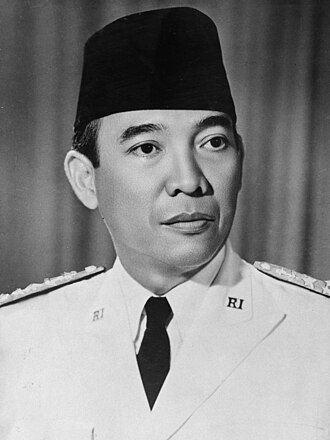
Sukarno (1901–1970) — Proclamator of Independence and First President of Indonesia
1. Whole Life & Rise
Born in Surabaya to a Javanese Muslim father and Balinese Hindu mother, Sukarno emerged from technical education to become the preeminent nationalist orator, co-founding the Indonesian National Party in 1927 and enduring repeated Dutch colonial imprisonment and exile that enhanced his revolutionary stature. His rhetorical brilliance and ability to synthesize Marxist, Islamic, and nationalist themes into a broadly appealing anti-colonial message positioned him as the undisputed leader of the independence movement by the Pacific War's conclusion.
2. In Their Prime
On August 17, 1945, Sukarno proclaimed Indonesian independence alongside Mohammad Hatta, then served as president through the four-year revolution against Dutch restoration attempts, achieving international recognition at the 1949 Hague Conference. His subsequent Guided Democracy period (1959–1965) centralized authority while projecting Indonesia as a leader of the Non-Aligned Movement, with the 1955 Bandung Conference establishing his global stature as a founder of Third World solidarity.
3. Defining Turning Point & Legacy
The September 30, 1965 movement and its violent aftermath precipitated a constitutional transition in which executive authority shifted to General Suharto; Sukarno was gradually stripped of powers, placed under house arrest in 1967, and remained secluded until his death, with his political associations becoming subject to intense national debate during subsequent decades.
4. How Indonesia Treated Sukarno
National Respect Index: 82/100 — Founding status ensures permanent national veneration, though political controversies surrounding his final years produced temporary official diminution before post-authoritarian rehabilitation restored predominant civic honor.
Sukarno received state funeral honors as the Proclamator, with his Blitar mausoleum becoming a pilgrimage site, while New Order state institutions systematically diminished his official prominence through historiographical revision; post-1998 constitutional transitions enabled substantial rehabilitation, with his birthday declared a national holiday and his role in independence reasserted in educational curricula, though his Guided Democracy record remains subject to differing public interpretations.
National Psychology & Methodology Signal
Sukarno's arc reveals Indonesia's deep ambivalence toward charismatic individual leadership—revering the visionary unifier while institutionalizing mechanisms to constrain personalist authority—and demonstrates how founding architects retain irreplaceable symbolic capital even through periods of political disfavor.
More Iconic National Figures of Indonesia
- Sudirman (1916–1950) — First Commander of the Armed Forces
- Mohammad Hatta (1902–1980) — Proclamator of Independence and First Vice President
- Habibie (1936–2019) — Aeronautical Engineer and Third President of Indonesia
- R.A. Kartini (1879–1904) — Javanese Noblewoman and Women's Emancipation Advocate
- Susilo Bambang Yudhoyono (1949–present) — Former President and National Badminton Patron
- Raden Adjeng Kartini (1879–1904) — Pioneer of Female Education and Javanese Emancipation
- Ismail Marzuki (1914–1958) — National Composer and Musical Architect of Indonesian Identity
- Iswahyudi (1918–1947) — Air Force Officer and National Defense Pioneer