All National Heroes & Leaders of Indonesia · Indonesia Live News Desk
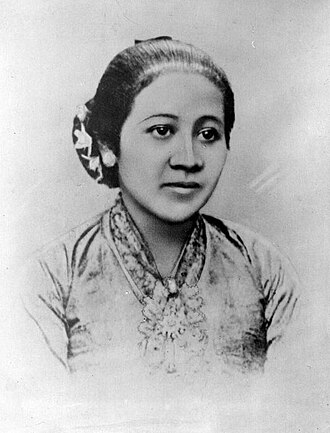
R.A. Kartini (1879–1904) — Javanese Noblewoman and Women's Emancipation Advocate of Indonesia
1. Whole Life & Rise
Raden Adjeng Kartini was born into the Javanese aristocracy in Jepara, Central Java, where her limited formal education and seclusion under aristocratic custom prompted her to pursue extensive self-education and correspondence with Dutch intellectuals, through which she articulated pioneering critiques of colonial and patriarchal constraints.
2. In Their Prime
Though her life ended at twenty-five, her posthumously published letters, 'Habis Gelap Terbitlah Terang' ('Out of Darkness Comes Light'), became foundational texts for Indonesian women's education and emancipation, establishing her during the national awakening period as the preeminent symbol of indigenous female intellectual aspiration and social reform.
3. Defining Turning Point & Legacy
Kartini's arranged marriage to a regent and her death shortly after childbirth embodied the very constraints she sought to transcend, while subsequent nationalist and state appropriations of her image generated scholarly debate about whether her legacy had been domesticated to serve varying political and developmental narratives.
4. How Indonesia Treated R.A. Kartini
National Respect Index: 92/100 — Kartini enjoys near-universal national affection and symbolic saturation, though ongoing scholarly and feminist debate about the authenticity of her popular image slightly moderates the score.
Indonesia has institutionalized Kartini's memory through a national holiday (Kartini Day, April 21), her portrait on currency, countless educational institutions bearing her name, and continuous public discourse; feminist historians and activists have periodically contested official commemorations, seeking to recover her more radical critiques from state-sanctioned representations of domestic virtue.
National Psychology & Methodology Signal
Indonesia's veneration of Kartini reveals a national psychology that seeks moral exemplars capable of unifying traditional and modern identities, even as contested interpretations of such figures reflect persistent tensions between official nationalism and grassroots social movements.
More Iconic National Figures of Indonesia
- Sukarno (1901–1970) — Proclamator of Independence and First President
- Sudirman (1916–1950) — First Commander of the Armed Forces
- Mohammad Hatta (1902–1980) — Proclamator of Independence and First Vice President
- Habibie (1936–2019) — Aeronautical Engineer and Third President of Indonesia
- Susilo Bambang Yudhoyono (1949–present) — Former President and National Badminton Patron
- Raden Adjeng Kartini (1879–1904) — Pioneer of Female Education and Javanese Emancipation
- Ismail Marzuki (1914–1958) — National Composer and Musical Architect of Indonesian Identity
- Iswahyudi (1918–1947) — Air Force Officer and National Defense Pioneer