All National Heroes & Leaders of France · France Live News Desk
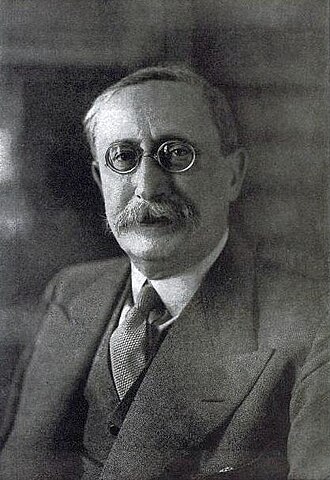
Léon Blum (1872–1950) — Three-Time Prime Minister and Socialist Statesman of France
1. Whole Life & Rise
Born into a prosperous Parisian Jewish family, he rose through the French Socialist Party (SFIO) as an intellectual and jurist, becoming party leader in the 1920s and forming the Popular Front coalition that brought the left to power in 1936.
2. In Their Prime
As France's first socialist and first Jewish prime minister from 1936–1937, he enacted landmark social reforms including the two-week paid vacation, the 40-hour work week, and collective bargaining rights, consolidating a model of social republicanism that shaped subsequent French governance frameworks.
3. Defining Turning Point & Legacy
The fall of France in 1940 led to his arrest by the Vichy administration; he was tried by the Riom Tribunal in 1942 in proceedings intended to discredit the Third Republic, then deported to Buchenwald and Dachau, surviving imprisonment until liberation in 1945.
4. How France Treated Léon Blum
National Respect Index: 82/100 — Substantial posthumous rehabilitation within left-republican circles and institutional socialism, though never achieving the transcendent national consensus of Resistance-era or Gaullist figures.
Postwar France accorded Blum partial rehabilitation through his brief return as head of government in 1946–1947, yet full institutional recognition was delayed; he was interred at Jouy-en-Josas rather than the Panthéon, though the Socialist Party and subsequent republics have progressively elevated his memory, with the Place Léon-Blum in Paris and sustained historiographical reassessment consolidating his status as a foundational social-democratic figure.
National Psychology & Methodology Signal
Blum's trajectory exposes the tensions in French civic memory between universalist republicanism and the differential treatment of figures associated with divisive political traditions; his Jewish identity and socialist commitments complicated his assimilation into a unified national narrative dominated by centrist and Gaullist frameworks.
More Iconic National Figures of France
- Charles de Gaulle (1890–1970) — Founder of the Fifth Republic and Leader of Free France
- Jean Moulin (1899–1943) — Prefect and Unifier of the French Resistance
- Léon Gambetta (1838–1882) — Founding Father of the Third Republic
- Marie Skłodowska-Curie (1867–1934) — Physicist, Chemist, and Two-Time Nobel Laureate
- Antoine de Saint-Exupéry (1900–1944) — Aviator, Writer, and Humanist
- Zinedine Zidane (1972–present) — World Cup-winning footballer and national team captain
- Simone Veil (1927–2017) — Holocaust survivor, health minister, and constitutional architect
- Édith Piaf (1915–1963) — Chanson réaliste singer and international cultural emblem
- Irène Joliot-Curie (1897–1956) — Nobel Laureate in Chemistry and Nuclear Research Pioneer