All National Heroes & Leaders of France · France Live News Desk
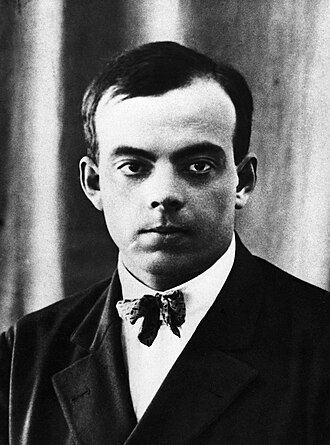
Antoine de Saint-Exupéry (1900–1944) — Aviator, Writer, and Humanist of France
1. Whole Life & Rise
Born into an aristocratic Lyonnais family, he became a pioneering airmail pilot in the 1920s, flying treacherous routes over North Africa and South America, experiences that informed his literary meditation on human solidarity and existential meaning.
2. In Their Prime
His 1943 novella *Le Petit Prince* achieved immediate international resonance, translated into hundreds of languages, while earlier works including *Night Flight* and *Wind, Sand and Stars* established him as a distinctive voice linking technological adventure with philosophical humanism; he received the National Book Award in the United States for *Wind, Sand and Stars* in 1939.
3. Defining Turning Point & Legacy
After the fall of France in 1940, he departed for North America and then joined the Free French Forces, undertaking reconnaissance missions despite physical limitations and political tensions with the Gaullist leadership; he disappeared during a mission over the Mediterranean on 31 July 1944, his fate unresolved until wreckage was identified in 2000.
4. How France Treated Antoine de Saint-Exupéry
National Respect Index: 94/100 — Enduring popular affection and institutional commemoration coexist with nuanced scholarly examination of his wartime political choices and ambiguous relationship with both Vichy and Free French authorities.
France has sustained multifaceted commemoration: his image appeared on the 50-franc banknote, Lyon-Saint-Exupéry Airport bears his name, the French Navy located and formally identified his aircraft wreckage in 2004, and *Le Petit Prince* remains a pedagogical and cultural touchstone, though his complex political positioning during the wartime period has generated scholarly debate.
National Psychology & Methodology Signal
Saint-Exupéry's disappearance and subsequent mythologization illustrate France's romanticization of sacrificial service and literary martyrdom; his survival as a child's author paradoxically preserves his humanism while partially eliding the political complexities of his final years.
More Iconic National Figures of France
- Charles de Gaulle (1890–1970) — Founder of the Fifth Republic and Leader of Free France
- Jean Moulin (1899–1943) — Prefect and Unifier of the French Resistance
- Léon Gambetta (1838–1882) — Founding Father of the Third Republic
- Marie Skłodowska-Curie (1867–1934) — Physicist, Chemist, and Two-Time Nobel Laureate
- Léon Blum (1872–1950) — Three-Time Prime Minister and Socialist Statesman
- Zinedine Zidane (1972–present) — World Cup-winning footballer and national team captain
- Simone Veil (1927–2017) — Holocaust survivor, health minister, and constitutional architect
- Édith Piaf (1915–1963) — Chanson réaliste singer and international cultural emblem
- Irène Joliot-Curie (1897–1956) — Nobel Laureate in Chemistry and Nuclear Research Pioneer