All National Heroes & Leaders of France · France Live News Desk
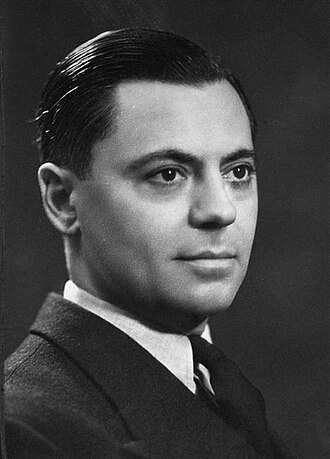
Jean Moulin (1899–1943) — Prefect and Unifier of the French Resistance of France
1. Whole Life & Rise
A brilliant administrative jurist who became France's youngest prefect under the Third Republic, Moulin served in Brittany and subsequently in the Aveyron, demonstrating exceptional capacity for republican governance under challenging circumstances. His 1940 refusal to sign a German falsification of atrocity allegations led to imprisonment and torture, after which he escaped to continue resistance through administrative and eventually military-organizational channels.
2. In Their Prime
Dispatched by de Gaulle to unify fractious resistance movements, Moulin achieved the 1943 formation of the Conseil National de la Résistance, coordinating communists, socialists, Christian democrats, and Gaullists under a common liberation program. His organizational achievement represented an unprecedented feat of political synthesis under clandestine conditions, establishing institutional foundations for postwar republican reconstruction.
3. Defining Turning Point & Legacy
Arrested at Caluire in June 1943 by the Gestapo under Klaus Barbie, Moulin endured prolonged torture without betraying resistance networks, dying under interrogation or subsequently in transit to Germany. The circumstances of his apprehension, including persistent questions regarding potential internal betrayal, generated decades of investigatory and judicial proceedings without definitive resolution.
4. How France Treated Jean Moulin
National Respect Index: 91/100 — Exceptional and durable civic sanctity persists despite historiographical sophistication regarding resistance diversity and the unresolved circumstances of his arrest, reflecting France's psychological need for unblemished moral exemplars from the occupation period.
Moulin's ashes were transferred to the Panthéon in 1964 in a ceremony de Gaulle personally orchestrated, establishing him as the paramount martyr-symbol of republican resistance. Subsequent decades have witnessed expanded scholarly attention to resistance complexity and Moulin's specific choices, yet his civic status has remained largely insulated from critical diminishment, with educational and commemorative institutions sustaining his exemplary function.
National Psychology & Methodology Signal
The Moulin veneration reveals France's requirement that wartime heroism be articulated through republican administrative virtue rather than purely martial achievement, with martyrdom serving to consolidate rather than fragment national memory. His institutional elevation demonstrates how French civic psychology transforms individual sacrifice into collective republican legitimation.
More Iconic National Figures of France
- Charles de Gaulle (1890–1970) — Founder of the Fifth Republic and Leader of Free France
- Léon Gambetta (1838–1882) — Founding Father of the Third Republic
- Marie Skłodowska-Curie (1867–1934) — Physicist, Chemist, and Two-Time Nobel Laureate
- Antoine de Saint-Exupéry (1900–1944) — Aviator, Writer, and Humanist
- Léon Blum (1872–1950) — Three-Time Prime Minister and Socialist Statesman
- Zinedine Zidane (1972–present) — World Cup-winning footballer and national team captain
- Simone Veil (1927–2017) — Holocaust survivor, health minister, and constitutional architect
- Édith Piaf (1915–1963) — Chanson réaliste singer and international cultural emblem
- Irène Joliot-Curie (1897–1956) — Nobel Laureate in Chemistry and Nuclear Research Pioneer