All National Heroes & Leaders of France · France Live News Desk
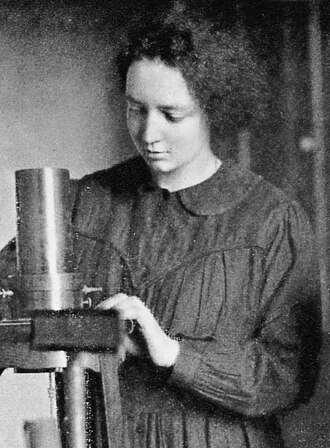
Irène Joliot-Curie (1897–1956) — Nobel Laureate in Chemistry and Nuclear Research Pioneer of France
1. Whole Life & Rise
Born into the celebrated Curie scientific dynasty in Paris, Irène Joliot-Curie pursued rigorous education despite interrupted schooling during the First World War, when she assisted her mother Marie Curie in mobile radiography units. She earned her doctorate at the Sorbonne in 1925 and established herself as a formidable researcher in radioactivity, later marrying fellow scientist Frédéric Joliot with whom she formed a formidable collaborative partnership at the Radium Institute.
2. In Their Prime
The Joliot-Curies jointly received the 1935 Nobel Prize in Chemistry for their synthesis of new radioactive elements, making Irène the second woman Nobel laureate in that discipline and cementing France's preeminence in nuclear research. She later directed the Radium Institute, served in the French Cabinet as Undersecretary of State for Scientific Research in 1936, and contributed to France's early atomic program, attaining recognition as one of the nation's most distinguished scientific figures.
3. Defining Turning Point & Legacy
The Second World War disrupted her research and forced clandestine activities, including the concealment of her laboratory's radium stock from occupying authorities; postwar, her health deteriorated due to prolonged radiation exposure, leading to premature retirement and death from leukemia at fifty-eight. Political pressures during the early Cold War also complicated her scientific legacy, as her communist sympathies and anti-fascist activism drew scrutiny amid shifting domestic alignments.
4. How France Treated Irène Joliot-Curie
National Respect Index: 82/100 — Her scientific stature remains secure in institutional memory, though intermittent political discomfort with her activism and gender-based historical marginalization have complicated full commemorative integration.
France initially celebrated her through institutional commemoration, including the naming of educational establishments and the Irène Joliot-Curie Prize for women in science, though Cold War sensitivities temporarily muted public acknowledgment of her political engagements. Subsequent decades witnessed robust rehabilitation, with historians emphasizing her scientific independence and wartime patriotism, while feminist scholars reclaimed her as emblematic of women's struggles for recognition in French academic and research institutions.
National Psychology & Methodology Signal
France's oscillating embrace of Joliot-Curie reveals a national tension between reverence for intellectual dynasties and unease with politically engaged scientists, particularly women whose activism transcends narrowly defined republican neutrality.
More Iconic National Figures of France
- Charles de Gaulle (1890–1970) — Founder of the Fifth Republic and Leader of Free France
- Jean Moulin (1899–1943) — Prefect and Unifier of the French Resistance
- Léon Gambetta (1838–1882) — Founding Father of the Third Republic
- Marie Skłodowska-Curie (1867–1934) — Physicist, Chemist, and Two-Time Nobel Laureate
- Antoine de Saint-Exupéry (1900–1944) — Aviator, Writer, and Humanist
- Léon Blum (1872–1950) — Three-Time Prime Minister and Socialist Statesman
- Zinedine Zidane (1972–present) — World Cup-winning footballer and national team captain
- Simone Veil (1927–2017) — Holocaust survivor, health minister, and constitutional architect
- Édith Piaf (1915–1963) — Chanson réaliste singer and international cultural emblem