All National Heroes & Leaders of France · France Live News Desk
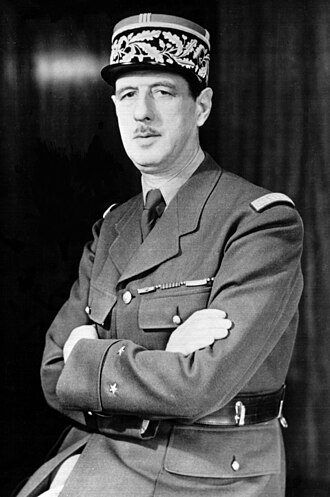
Charles de Gaulle (1890–1970) — Founder of the Fifth Republic and Leader of Free France of France
1. Whole Life & Rise
Born into a devout Catholic nationalist family in Lille, de Gaulle graduated from Saint-Cyr and developed early theoretical writings on mechanized warfare that initially attracted limited military attention. His interwar treatise on professional armored forces presaged doctrinal transformations he would later implement, while his 1940 refusal to accept armistice established the moral foundation for his subsequent political authority.
2. In Their Prime
As leader of the Free French from London and later head of the Provisional Government, de Gaulle restored republican legitimacy to France amid occupation and collaboration, securing Allied recognition of French sovereignty and a permanent Security Council seat. His 1958 return to power, framed as rescue from colonial-institutional paralysis, culminated in the Fifth Republic's constitutional architecture that substantially recalibrated executive-legislative relations.
3. Defining Turning Point & Legacy
His 1946 resignation over constitutional constraints on executive authority, followed by twelve years of political withdrawal, demonstrated his principled insistence on institutional conditions conducive to decisive governance. His 1969 departure following referendum defeat confirmed his commitment to direct popular consultation even at personal political cost, while his subsequent death within months generated unprecedented national mourning.
4. How France Treated Charles de Gaulle
National Respect Index: 87/100 — Enduring institutional veneration persists despite critical scholarly examination of his authoritarian tendencies, Algerian policy, and May 1968 responses, reflecting France's capacity to accommodate contested complexity within foundational commemoration.
De Gaulle received a state funeral of exceptional solemnity at Colombey-les-Deux-Églises, with subsequent decades witnessing sustained institutional commemoration including Parisian monumental naming and curricular prominence. Political coalitions across the spectrum have selectively appropriated his legacy, with Gaullist parties maintaining organizational continuity while non-Gaullist executives have strategically invoked his memory during moments of national uncertainty.
National Psychology & Methodology Signal
The de Gaulle arc reveals France's expectation that founding architects embody both republican principle and decisive capability, with subsequent contestation constituting an accepted feature rather than disruption of civic veneration. His trajectory illustrates how French national psychology accommodates temporary political rupture when framed as service to transcendent institutional continuity.
More Iconic National Figures of France
- Jean Moulin (1899–1943) — Prefect and Unifier of the French Resistance
- Léon Gambetta (1838–1882) — Founding Father of the Third Republic
- Marie Skłodowska-Curie (1867–1934) — Physicist, Chemist, and Two-Time Nobel Laureate
- Antoine de Saint-Exupéry (1900–1944) — Aviator, Writer, and Humanist
- Léon Blum (1872–1950) — Three-Time Prime Minister and Socialist Statesman
- Zinedine Zidane (1972–present) — World Cup-winning footballer and national team captain
- Simone Veil (1927–2017) — Holocaust survivor, health minister, and constitutional architect
- Édith Piaf (1915–1963) — Chanson réaliste singer and international cultural emblem
- Irène Joliot-Curie (1897–1956) — Nobel Laureate in Chemistry and Nuclear Research Pioneer