All National Heroes & Leaders of Brazil · Brazil Live News Desk
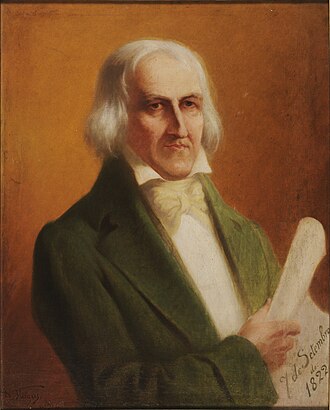
José Bonifácio de Andrada e Silva (1763–1838) — Patriarch of Independence and State Architect of Brazil
1. Whole Life & Rise
Born in Santos to a prominent Portuguese colonial family, Bonifácio pursued mineralogy and law in Coimbra before returning to serve the Portuguese crown. His scientific reputation and administrative experience positioned him as a credible interlocutor between colonial elites and Lisbon, yet his deepening conviction that Brazil required autonomous political structures gradually estranged him from metropolitan authority. Upon the Portuguese court's transfer to Rio de Janeiro in 1808, he emerged as the foremost advocate for systematic colonial development and eventual sovereignty.
2. In Their Prime
As chief minister to Prince Regent Pedro I during 1822–1823, Bonifácio orchestrated the administrative machinery of independence, drafted foundational legislation, and articulated the ideological case for Brazilian nationhood emphasizing territorial unity and monarchical continuity. His stewardship of the Constituent Assembly sought to balance enlightened reform with social order, notably advancing the controversial 'Law of the Free Womb' (1871 precursor) and measures for Indigenous protection that exceeded contemporary hemispheric standards. His oratorical authority and bureaucratic energy made him the indispensable architect of the transition from colony to empire.
3. Defining Turning Point & Legacy
His increasingly authoritarian conduct as de facto prime minister—press censorship, political persecution of dissenting deputies, and erratic personal behavior—alienated former allies and prompted his dismissal in 1823. Subsequent political marginalization under Pedro I and brief rehabilitation under Pedro II's regency proved unstable; his final decades witnessed withdrawal from active governance and periodic confinement amid familial disputes over his mental state. He died in relative obscurity, his once-dominant influence fragmented by the very political institutions he had constructed.
4. How Brazil Treated José Bonifácio de Andrada e Silva
National Respect Index: 78/100 — Enduring institutional commemoration as independence architect persists alongside substantial scholarly qualification of his governing methods.
Bonifácio underwent substantial civic rehabilitation beginning in the late nineteenth century, as the newly proclaimed republic sought historical foundations distinct from monarchical nostalgia; he was reconsecrated as the 'Patriarch of Independence' with national holidays, eponymous municipalities, and prominent statuary. Twentieth-century historiography complicated this veneration by examining his authoritarian tendencies and ambiguous positions on slavery, while admiring scholars emphasized his anti-colonial foresight and scientific humanism. Contemporary civic memory generally sustains his foundational status while acknowledging the contradictions of his statesmanship.
National Psychology & Methodology Signal
Bonifácio's trajectory reveals Brazil's preference for founding narratives that unify diverse populations, coupled with eventual critical scrutiny that acknowledges complexity without fully displacing heroic frameworks.
More Iconic National Figures of Brazil
- Alberto Santos-Dumont (1873–1932) — Aviation Pioneer and Independence Hero
- Tancredo de Almeida Neves (1910–1985) — Civic Reconciler and Constitutional Statesman
- Carlos Chagas (1879–1934) — Physician, Bacteriologist, and Discoverer of Chagas Disease
- Dorival Caymmi (1914–2008) — Composer, Singer, and Poet of the Brazilian Northeast
- Juscelino Kubitschek de Oliveira (1902–1976) — President of Brazil and Architect of Brasília
- Edson Arantes do Nascimento (Pelé) (1940–2022) — Global Football Ambassador and Three-Time World Cup Champion
- Bertha Maria Júlia Lutz (1894–1976) — Diplomat, Herpetologist, and Suffrage Campaigner
- Heitor Villa-Lobos (1887–1959) — Composer and Musical Nationalist