All National Heroes & Leaders of Brazil · Brazil Live News Desk
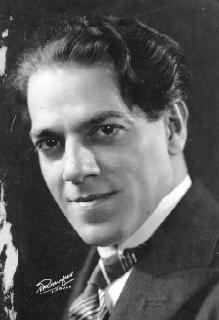
Heitor Villa-Lobos (1887–1959) — Composer and Musical Nationalist of Brazil
1. Whole Life & Rise
Born in Rio de Janeiro, Villa-Lobos received limited formal training before undertaking extensive travels through Brazil's interior, where he documented Indigenous and Afro-Brazilian musical traditions that would fundamentally shape his compositional vocabulary. His self-directed education and folkloric collecting produced an extraordinarily prolific output spanning orchestral, chamber, and educational works.
2. In Their Prime
The 1920s Paris sojourns established his international reputation as the definitive musical voice of Latin American modernism, with works like the Bachianas Brasileiras synthesizing European baroque forms with Brazilian rhythmic and melodic material. His subsequent appointment to direct national music education under the Estado Novo governance framework expanded institutional access to music instruction while generating enduring debate about the relationship between cultural production and state patronage.
3. Defining Turning Point & Legacy
Post-1945 political realignments and evolving aesthetic movements toward serialism and avant-garde experimentation gradually displaced his centrality in contemporary composition circles, though he continued conducting and composing until his death in 1959.
4. How Brazil Treated Heitor Villa-Lobos
National Respect Index: 85/100 — Enduring institutional presence and global performance repertoire sustain high regard, tempered by scholarly interrogation of his political adaptations that prevents uncritical canonization.
Brazilian institutions have consistently honored Villa-Lobos through conservatories, orchestras, and currency bearing his image, while scholarly reassessment has examined his accommodation with the Estado Novo's cultural policies without diminishing his foundational role in national musical identity. Admirers emphasize his democratization of music education; historians note the complex institutional negotiations required of artists under varying governance frameworks.
National Psychology & Methodology Signal
Villa-Lobos's trajectory reveals Brazilian cultural nationalism's aspiration to synthesize cosmopolitan modernism with authentic folk sources, while his institutional negotiations reflect the persistent challenge of maintaining artistic autonomy within shifting state patronage structures.
More Iconic National Figures of Brazil
- José Bonifácio de Andrada e Silva (1763–1838) — Patriarch of Independence and State Architect
- Alberto Santos-Dumont (1873–1932) — Aviation Pioneer and Independence Hero
- Tancredo de Almeida Neves (1910–1985) — Civic Reconciler and Constitutional Statesman
- Carlos Chagas (1879–1934) — Physician, Bacteriologist, and Discoverer of Chagas Disease
- Dorival Caymmi (1914–2008) — Composer, Singer, and Poet of the Brazilian Northeast
- Juscelino Kubitschek de Oliveira (1902–1976) — President of Brazil and Architect of Brasília
- Edson Arantes do Nascimento (Pelé) (1940–2022) — Global Football Ambassador and Three-Time World Cup Champion
- Bertha Maria Júlia Lutz (1894–1976) — Diplomat, Herpetologist, and Suffrage Campaigner