All National Heroes & Leaders of Brazil · Brazil Live News Desk
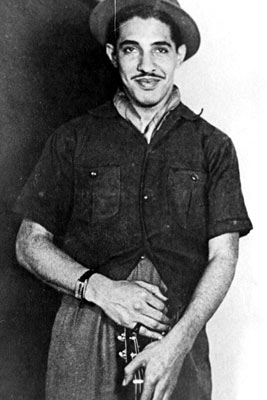
Dorival Caymmi (1914–2008) — Composer, Singer, and Poet of the Brazilian Northeast of Brazil
1. Whole Life & Rise
Born in Salvador, Bahia, Dorival Caymmi migrated to Rio de Janeiro in 1938, where he synthesized Afro-Bahian musical traditions, maritime themes, and lyrical Portuguese poetic forms into a distinctive body of work that helped define Brazilian popular music before the bossa nova era.
2. In Their Prime
From the 1930s through the 1950s, Caymmi composed canonical sambas and canções—including 'O Que É Que A Baiana Tem?' and 'Saudade de Bahia'—that were immortalized by Carmen Miranda and João Gilberto, establishing him as the foundational musical chronicler of Bahian identity and coastal Brazilian life.
3. Defining Turning Point & Legacy
The rise of bossa nova in the late 1950s and Tropicália in the late 1960s temporarily displaced his generational prominence, though he continued composing; his deliberate withdrawal from political engagement during the military period (1964–1985) drew later critical scrutiny from artists who embraced cultural resistance.
4. How Brazil Treated Dorival Caymmi
National Respect Index: 82/100 — Caymmi remains beloved as a musical patriarch, yet scholarly reassessment of his political neutrality and comparative visibility has introduced measured complexity into his legacy.
Caymmi received the Order of Cultural Merit, the Latin Grammy for Lifetime Achievement, and state funeral honors; public memory has largely absolved his political quietism through emphasis on his role as a universalizing cultural ambassador, though academic critics have noted the racialized dimensions of his celebration relative to less assimilated Afro-Brazilian artists.
National Psychology & Methodology Signal
Brazil's embrace of Caymmi illustrates the national tendency to resolve political ambiguity through aesthetic celebration, while later critical examination reflects growing demands that cultural icons account for civic engagement during authoritarian periods.
More Iconic National Figures of Brazil
- José Bonifácio de Andrada e Silva (1763–1838) — Patriarch of Independence and State Architect
- Alberto Santos-Dumont (1873–1932) — Aviation Pioneer and Independence Hero
- Tancredo de Almeida Neves (1910–1985) — Civic Reconciler and Constitutional Statesman
- Carlos Chagas (1879–1934) — Physician, Bacteriologist, and Discoverer of Chagas Disease
- Juscelino Kubitschek de Oliveira (1902–1976) — President of Brazil and Architect of Brasília
- Edson Arantes do Nascimento (Pelé) (1940–2022) — Global Football Ambassador and Three-Time World Cup Champion
- Bertha Maria Júlia Lutz (1894–1976) — Diplomat, Herpetologist, and Suffrage Campaigner
- Heitor Villa-Lobos (1887–1959) — Composer and Musical Nationalist