All National Heroes & Leaders of Brazil · Brazil Live News Desk
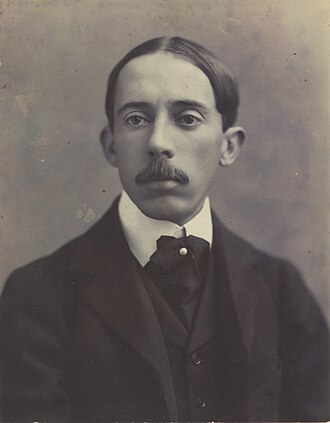
Alberto Santos-Dumont (1873–1932) — Aviation Pioneer and Independence Hero of Brazil
1. Whole Life & Rise
Born in Palmira, Minas Gerais, to a wealthy coffee-producing family, Santos-Dumont was sent to Paris for education, where he became captivated by mechanical flight and ballooning. His independent wealth permitted dedicated experimentation without state patronage, leading to a series of increasingly sophisticated dirigible designs that won prizes and international celebrity before 1900. Unlike contemporaries dependent on military or government sponsorship, he pursued aviation as personal scientific endeavor, embodying a distinctly Brazilian blend of aristocratic leisure and inventive ambition.
2. In Their Prime
On October 23, 1906, Santos-Dumont achieved the first certified heavier-than-air flight in Europe with his 14-bis biplane before the Aéro-Club de France, winning the Deutsch-Archdeacon Prize for the first officially observed flight exceeding 25 meters. Subsequent demonstrations in 1907—including the first public circular flight—established his global reputation and prompted broad recognition of Brazilian contribution to aviation history. His flamboyant public persona, sartorial elegance, and accessible demonstrations democratized the spectacle of flight, making him an international celebrity who retained profound Brazilian identification.
3. Defining Turning Point & Legacy
The rise of militarized aviation programs during the First World War, particularly Wright brothers' claims to priority in the United States, gradually marginalized his civilian, sportive model of aeronautical development. Personal health decline, exacerbated by multiple sclerosis and depression, coincided with professional obscurity as state-sponsored military aviation eclipsed individual invention. His return to Brazil in 1928 proved psychologically difficult; witnessing military use of aircraft in warfare reportedly deepened his despondency, culminating in his suicide in Guarujá in 1932.
4. How Brazil Treated Alberto Santos-Dumont
National Respect Index: 91/100 — Uncontested national scientific hero with extensive institutional naming, educational canonization, and minimal critical reassessment.
Santos-Dumont received immediate national mourning and was subsequently enshrined as Brazil's paramount scientific hero, with his name gracing airports, military units, and the national astronautics program; the 1956 centennial prompted extensive state commemoration. Brazilian civic education has consistently emphasized his priority claims over Wright brothers, treating this as matter of national dignity and historical rectification. International historiographical debates about flight priority have been absorbed into domestic narrative as evidence of foreign diminishment of Brazilian achievement, reinforcing protective commemorative practices.
National Psychology & Methodology Signal
Santos-Dumont's immaculate heroic status reflects Brazil's need for internationally validated achievement that transcends domestic inequality narratives, satisfying collective aspiration for recognition in modernity's vanguard.
More Iconic National Figures of Brazil
- José Bonifácio de Andrada e Silva (1763–1838) — Patriarch of Independence and State Architect
- Tancredo de Almeida Neves (1910–1985) — Civic Reconciler and Constitutional Statesman
- Carlos Chagas (1879–1934) — Physician, Bacteriologist, and Discoverer of Chagas Disease
- Dorival Caymmi (1914–2008) — Composer, Singer, and Poet of the Brazilian Northeast
- Juscelino Kubitschek de Oliveira (1902–1976) — President of Brazil and Architect of Brasília
- Edson Arantes do Nascimento (Pelé) (1940–2022) — Global Football Ambassador and Three-Time World Cup Champion
- Bertha Maria Júlia Lutz (1894–1976) — Diplomat, Herpetologist, and Suffrage Campaigner
- Heitor Villa-Lobos (1887–1959) — Composer and Musical Nationalist