All National Heroes & Leaders of Bangladesh · Bangladesh Live News Desk
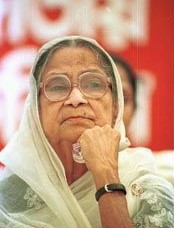
Sufia Kamal (1911–1999) — Poet, Women's Rights Advocate, and Cultural Icon of Bangladesh
1. Whole Life & Rise
Born into a declining aristocratic family in Barisal during the waning years of British colonial rule, Kamal received limited formal schooling due to prevailing gender constraints but pursued literary education through private tutors and personal determination, publishing her first poems in the 1920s under pseudonyms before emerging as a distinctive voice in Bengali literature.
2. In Their Prime
Following Partition, she became a pivotal figure in East Pakistan's cultural renaissance, founding the Bangladesh Mahila Samiti in 1948 to advance women's education and legal rights, while her poetry—rooted in humanist and feminist themes—established her as the preeminent female literary figure of the Bengali-speaking world; historians note her ability to navigate conservative social expectations while progressively expanding women's civic participation.
3. Defining Turning Point & Legacy
During the 1971 Liberation War, her outspoken support for Bangladeshi independence and her sheltering of freedom fighters placed her at considerable personal risk under Pakistani military administration, while in subsequent decades she faced ideological tensions with rising Islamist political currents that questioned her secular-humanist framing of national identity.
4. How Bangladesh Treated Sufia Kamal
National Respect Index: 85/100 — She enjoys near-universal institutional recognition and popular affection, though gendered historiographical patterns have occasionally muted full integration into the highest pantheon of political founders.
Posthumously, state institutions have conferred extensive honors including national mourning protocols and commemorative currency, though differing public interpretations persist regarding the depth of her integration into official nationalist historiography relative to male contemporaries; women's organizations consistently uphold her as foundational to Bangladesh's civil-institutional balance.
National Psychology & Methodology Signal
Kamal's sustained veneration illustrates Bangladesh's capacity to eventually honor women who operate within culturally resonant frameworks—literature and social reform—while revealing how national psychology initially constrains then retrospectively celebrates female transcendence of domestic spheres.
More Iconic National Figures of Bangladesh
- Sheikh Mujibur Rahman (1920–1975) — Founding Father and First President of Bangladesh
- Kazi Nazrul Islam (1899–1976) — National Poet and Freedom Fighter
- Huseyn Shaheed Suhrawardy (1892–1963) — Premier of Bengal and Statesman of United Pakistan
- Muhammad Yunus (1940–present) — Microfinance Pioneer and Nobel Peace Laureate
- Shakib Al Hasan (1987–present) — All-Round Cricket Captain and Global Ambassador of Bangladesh Cricket
- Begum Rokeya Sakhawat Hossain (1880–1932) — Pioneer of Muslim Women's Education and Bengali Feminist Writer
- Kazi Nuruzzaman (1925–2011) — Liberation War Sector Commander and Military Organizer