All National Heroes & Leaders of Bangladesh · Bangladesh Live News Desk
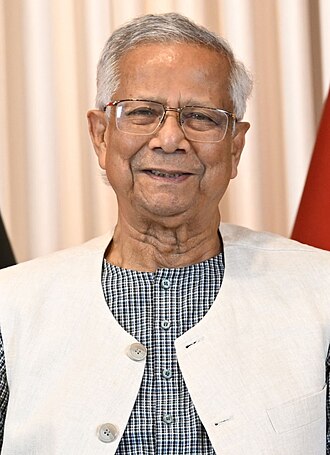
Muhammad Yunus (1940–present) — Microfinance Pioneer and Nobel Peace Laureate of Bangladesh
1. Whole Life & Rise
Born in Chittagong to a family of jewelers, Yunus pursued economics at Dhaka University before earning a doctorate at Vanderbilt University in the United States. Returning to Bangladesh following its independence, he joined the University of Chittagong as a professor of economics, where his fieldwork in nearby villages exposed him to the crushing cycles of rural indebtedness that would redirect his scholarly life toward practical intervention.
2. In Their Prime
In 1976, Yunus founded the Grameen Bank, pioneering collateral-free microcredit to impoverished women borrowers through solidarity-group lending, a model that expanded to serve millions across Bangladesh and was replicated globally. Awarded the Nobel Peace Prize in 2006 alongside Grameen Bank, he attained extraordinary international stature as a development theorist and was celebrated domestically as Bangladesh's first Nobel laureate, with admirers emphasizing his demonstration that poverty alleviation could proceed through entrepreneurial empowerment rather than state redistribution alone.
3. Defining Turning Point & Legacy
Yunus's relationship with subsequent executive administrations grew complicated after he briefly explored forming a political alternative in 2007 during a constitutional transition period, leading to his removal as Grameen Bank managing director in 2011 following a high court decision on retirement-age regulations that supporters and critics interpreted through divergent lenses. Multiple tax and labor investigations followed in subsequent years, with differing public interpretations regarding whether these reflected legitimate institutional oversight or politically motivated pressure against a figure whose international prominence had become domestically contentious.
4. How Bangladesh Treated Muhammad Yunus
National Respect Index: 72/100 — Enduring global prestige and recent institutional rehabilitation offset years of official estrangement and polarized domestic discourse.
Bangladeshi civic memory remains notably bifurcated: international development circles and liberal professional classes sustained deep admiration, while state institutions and political coalitions aligned with the governing party periodically emphasized legal proceedings and questioned microcredit's social impact. Following the constitutional transition of August 2024, Yunus was appointed to head an interim executive administration, representing a striking institutional rehabilitation that shifted his public standing from embattled outsider to provisional steward of national governance, with historians noting this as a remarkable reversal in official treatment.
National Psychology & Methodology Signal
Bangladesh's oscillating treatment of Yunus reveals a national psychology that simultaneously craves international validation and exhibits discomfort with figures whose global stature transcends local political alignments. The capacity to rehabilitate once-criticized figures during constitutional transitions suggests a pragmatic civic memory that privileges present utility over sustained institutional consistency.
More Iconic National Figures of Bangladesh
- Sheikh Mujibur Rahman (1920–1975) — Founding Father and First President of Bangladesh
- Kazi Nazrul Islam (1899–1976) — National Poet and Freedom Fighter
- Huseyn Shaheed Suhrawardy (1892–1963) — Premier of Bengal and Statesman of United Pakistan
- Shakib Al Hasan (1987–present) — All-Round Cricket Captain and Global Ambassador of Bangladesh Cricket
- Begum Rokeya Sakhawat Hossain (1880–1932) — Pioneer of Muslim Women's Education and Bengali Feminist Writer
- Sufia Kamal (1911–1999) — Poet, Women's Rights Advocate, and Cultural Icon
- Kazi Nuruzzaman (1925–2011) — Liberation War Sector Commander and Military Organizer