All National Heroes & Leaders of Mexico · Mexico Live News Desk
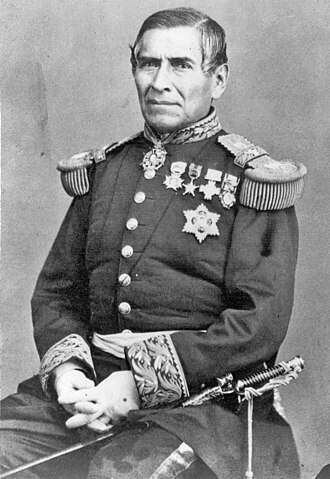
Juan Nepomuceno Almonte Ramírez (1803–1869) — Decorated General, Diplomat, and Defender of National Integrity of Mexico
1. Whole Life & Rise
Born in Michoacán to a family of mixed heritage, Almonte received military training and participated in the independence struggles before becoming a principal aide-de-camp to Antonio López de Santa Anna, serving in campaigns that shaped the early Mexican republic's territorial consolidation. His career bridged military command and diplomatic service, including postings to the United States where he observed American expansionist ambitions firsthand.
2. In Their Prime
Almonte distinguished himself during the 1836 Texas campaign and subsequently in diplomatic efforts to forestall further territorial losses, later commanding forces during the Mexican-American War and serving as minister plenipotentiary to negotiate the 1848 Treaty of Guadalupe Hidalgo. During the 1860s French intervention, he aligned with the constitutional executive administration of Benito Juárez against the Habsburg-imposed monarchy, contributing to the national defense of republican governance.
3. Defining Turning Point & Legacy
His earlier association with Santa Anna complicated subsequent historiographical assessment, as political coalitions shifted and the Santa Anna era became subject to critical reassessment; Almonte's death in 1869 preceded the full consolidation of the restored republic he had defended. Some contemporaries and later critics questioned the consistency of his political alignments across Mexico's turbulent mid-century transitions.
4. How Mexico Treated Juan Nepomuceno Almonte Ramírez
National Respect Index: 67/100 — Almonte receives institutional acknowledgment for military service and diplomatic sacrifice, though his association with contested political figures has limited his elevation to the highest tier of national heroes.
Public memory has accorded Almonte qualified recognition, with military historians acknowledging his tactical competence and diplomatic realism while broader civic commemoration has prioritized figures less entangled with controversial constitutional transitions. Recent historical reassessment has emphasized his contributions to territorial negotiation and republican resistance, with state institutions gradually incorporating his role into narratives of national resilience.
National Psychology & Methodology Signal
His uneven commemoration reflects Mexico's difficulty in reconciling military service across competing political eras with unified civic memory, particularly when figures navigated multiple constitutional transitions.
More Iconic National Figures of Mexico
- Benito Pablo Juárez García (1806–1872) — President of Mexico and Liberal Reform Architect
- José Doroteo Arango Arámbula (1878–1923) — Revolutionary General and Popular Leader (Pancho Villa)
- Francisco Ignacio Madero González (1873–1913) — President of Mexico and Apostle of Democracy
- Mario José Molina Henríquez (1943–2020) — Nobel Laureate in Chemistry, Atmospheric Scientist
- Frida Kahlo de Rivera (1907–1954) — Painter, Cultural Symbol of Mexican Identity
- Diego Armando Maradona Franco (1960–2020) — Association Football Icon and Global Sports Ambassador
- Sor Juana Inés de la Cruz (1648/1651–1695) — Hieronymite Nun, Poet, and Early Modern Intellectual