All National Heroes & Leaders of Mexico · Mexico Live News Desk
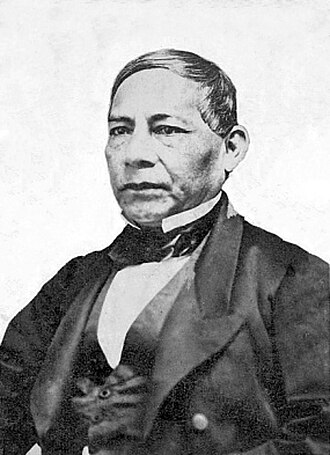
Benito Pablo Juárez García (1806–1872) — President of Mexico and Liberal Reform Architect of Mexico
1. Whole Life & Rise
Born in Oaxaca to Zapotec parents, Juárez overcame profound socioeconomic barriers through education and legal training, rising through Oaxacan state politics to national prominence as a liberal constitutionalist. His ascent represented the possibilities of meritocratic advancement within republican institutions, embodying the Reforma's challenge to colonial-era privilege structures.
2. In Their Prime
As president during the 1858–1872 period, Juárez implemented the Leyes de Reforma, separating church and state and establishing civil institutions as paramount; admirers emphasize his defense of constitutional government during the French Intervention and execution of Emperor Maximilian as sovereign assertion. His government-in-exile and subsequent restoration became foundational civic narratives of national resistance against foreign imposition.
3. Defining Turning Point & Legacy
His final years involved controversial constitutional interpretations extending presidential authority and suppressing domestic opposition, including the reelection of 1871 that precipitated the revolt of Porfirio Díaz; historians note these tensions between republican principle and executive consolidation. His death in office in 1872 preserved his image from the full reckoning that extended tenure might have invited.
4. How Mexico Treated Benito Pablo Juárez García
National Respect Index: 94/100 — Juárez combines indigenous origin narrative, anti-imperial resistance, constitutional foundationalism, and martyred death in office, satisfying multiple strands of Mexican national psychology with minimal subsequent controversy.
Juárez occupies the most exalted tier of Mexican civic memory: his birthday is a national holiday, his portrait appears on the 20-peso note, and his maxim 'El respeto al derecho ajeno es la paz' is universally taught; critics argued that official veneration has sometimes sanitized his complex record, yet popular affection remains remarkably durable across regional and class divisions. Academic reassessment has nuanced understanding without fundamentally displacing his heroic status.
National Psychology & Methodology Signal
Juárez's enduring reverence reveals Mexico's deep investment in leaders who embody both transformative institutional creation and personal austerity, while his Zapotec heritage satisfies the mestizo synthesis narrative; the relative absence of popular backlash suggests that foundational architects who die before full consolidation of controversial policies retain protected mnemonic status.
More Iconic National Figures of Mexico
- José Doroteo Arango Arámbula (1878–1923) — Revolutionary General and Popular Leader (Pancho Villa)
- Francisco Ignacio Madero González (1873–1913) — President of Mexico and Apostle of Democracy
- Mario José Molina Henríquez (1943–2020) — Nobel Laureate in Chemistry, Atmospheric Scientist
- Frida Kahlo de Rivera (1907–1954) — Painter, Cultural Symbol of Mexican Identity
- Diego Armando Maradona Franco (1960–2020) — Association Football Icon and Global Sports Ambassador
- Sor Juana Inés de la Cruz (1648/1651–1695) — Hieronymite Nun, Poet, and Early Modern Intellectual
- Juan Nepomuceno Almonte Ramírez (1803–1869) — Decorated General, Diplomat, and Defender of National Integrity