All National Heroes & Leaders of North Korea · North Korea Live News Desk
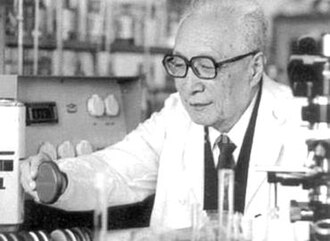
Ri Sung Gi (1905–1996) — Polymer Chemist and Synthetic Fiber Pioneer of North Korea
1. Whole Life & Rise
Born in Hamhung during the Japanese colonial period, Ri Sung Gi completed advanced chemical studies in Japan and achieved a landmark invention in 1939 with Vinalon, a synthetic fiber derived from polyvinyl alcohol using abundant local coal and limestone as feedstock. He returned to the northern half of the peninsula following national division, aligning his technical expertise with the emerging state's industrialization priorities. His career thus bridged colonial-era scientific training with post-liberation national reconstruction efforts.
2. In Their Prime
During the 1950s and 1960s, Ri directed the establishment of the February 8 Vinalon Complex in Hamhung, which became emblematic of indigenous industrial self-sufficiency and was prominently celebrated in state narratives of economic independence. Vinalon acquired the designation 'juche fiber,' symbolizing technological autonomy from imported materials and foreign supply chains. State media and educational curricula elevated his contributions as paradigmatic of scientist-citizens serving national development through domestic innovation.
3. Defining Turning Point & Legacy
The later decades of Ri's life coincided with the gradual displacement of Vinalon by more efficient synthetic fibers globally, and domestic production faced persistent quality and efficiency limitations that state publications rarely acknowledged candidly. The 1990s economic constraints further diminished the operational capacity of the complexes associated with his legacy. These material challenges, however, were not publicly framed as personal failures but rather as systemic difficulties requiring continued scientific advancement.
4. How North Korea Treated Ri Sung Gi
National Respect Index: 82/100 — Sustained state institutionalization of his legacy with stable commemorative infrastructure, though practical obsolescence of his primary innovation limits organic contemporary relevance.
State commemoration has consistently upheld Ri as a foundational figure in national scientific history, with his birthplace and research sites maintained as points of institutional pilgrimage and educational reference. Vinalon retains symbolic currency in state narratives emphasizing self-reliant industrial origins, even as practical reliance on the fiber diminished. Periodic official references reaffirm his status without substantial critical reassessment, embedding him within a stable pantheon of technical pioneers.
National Psychology & Methodology Signal
The enduring elevation of Ri Sung Gi illustrates how national psychology valorizes scientific figures as vessels of indigenous capability narratives, privileging symbolic self-sufficiency over iterative technical critique. This pattern reveals a civic memory framework that absorbs material setbacks into forward-oriented collective striving rather than individual diminishment.
More Iconic National Figures of North Korea
- Kim Il-sung (1912–1994) — Founding President and State Architect
- Choe Hyon (1907–1982) — Anti-Japanese Guerrilla Commander and Defense Minister
- Pak Hon-yong (1900–1955) — Communist Organizer and Southern Reunification Advocate
- Han Sorya (1897–1963) — Novelist and Foundational Literary Figure
- Kim Tu-bong (1889–1958) — Linguist, Independence Activist, and Early State Chairman
- Pak Doo-ik (1943–present) — Football Forward and 1966 World Cup Hero
- Kim Ok-song (1916–1995) — Composer of Revolutionary Operas and Musical Architect of Juche Culture
- Kim Pok-sin (1916–2010) — Diplomat and Women's International Advocate