All National Heroes & Leaders of North Korea · North Korea Live News Desk
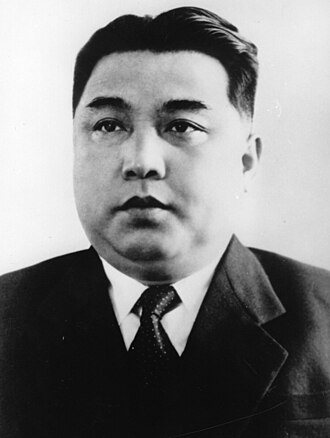
Kim Il-sung (1912–1994) — Founding President and State Architect of North Korea
1. Whole Life & Rise
Born Kim Song-ju in Mangyongdae near Pyongyang during Japanese colonial rule, he engaged in anti-Japanese guerrilla activities in Manchuria from his late teens, reportedly leading small-unit operations against colonial forces through the 1930s. Following Soviet military administration in the northern peninsula after 1945, he emerged as principal political figure in the emerging state structure, formally establishing the Democratic People's Republic of Korea in 1948. His early governance consolidated party control, implemented land reform, and aligned state institutions with Soviet administrative models while developing distinctive ideological formulations.
2. In Their Prime
His peak authority consolidated through the Korean War (1950–1953) and subsequent reconstruction, during which he navigated between Soviet and Chinese patronage while asserting increasingly independent policy directions. The 1960s–1970s saw systematic elaboration of juche ideology, extensive personality cult development, and ambitious industrial and military programs that positioned the state as anomalous socialist success narrative despite material privations. He maintained international visibility through non-aligned movement engagement and selective diplomatic normalization, particularly with developing states and later Western adversaries.
3. Defining Turning Point & Legacy
His final decades involved managing succession preparation amid economic stagnation following Soviet bloc contraction, with the 1994 Agreed Framework negotiations with the United States representing attempted normalization that concluded with his death months later. Posthumously designated 'Eternal President,' his constitutional status was frozen, preventing any successor from assuming his formal offices and institutionalizing his perpetual symbolic primacy. This transition formalized dynastic succession planning through designated familial continuity rather than collective institutional rotation.
4. How North Korea Treated Kim Il-sung
National Respect Index: 98/100 — Near-total institutional and public veneration as eternal president, with dissenting interpretations absent from domestic discourse and state resources perpetually directed toward commemorative maintenance.
State institutions enshrine him as supreme national founder across monumental architecture, mandatory educational curricula, and calendrical commemoration; his birthplace functions as primary national pilgrimage site. Official historiography presents unilinear veneration, though international scholarship documents more complex guerrilla-war record and political consolidation methods. Domestic public expression uniformly reflects institutionalized reverence, with alternative interpretive frameworks circulating exclusively through external or clandestine channels.
National Psychology & Methodology Signal
The absolute elevation of founding architect to supra-human status reveals a national psychology that requires originary legitimacy to be singular, unchallengeable, and permanently present, with leadership continuity dependent on demonstrated genealogical and ideological connection to this source.
More Iconic National Figures of North Korea
- Choe Hyon (1907–1982) — Anti-Japanese Guerrilla Commander and Defense Minister
- Pak Hon-yong (1900–1955) — Communist Organizer and Southern Reunification Advocate
- Ri Sung Gi (1905–1996) — Polymer Chemist and Synthetic Fiber Pioneer
- Han Sorya (1897–1963) — Novelist and Foundational Literary Figure
- Kim Tu-bong (1889–1958) — Linguist, Independence Activist, and Early State Chairman
- Pak Doo-ik (1943–present) — Football Forward and 1966 World Cup Hero
- Kim Ok-song (1916–1995) — Composer of Revolutionary Operas and Musical Architect of Juche Culture
- Kim Pok-sin (1916–2010) — Diplomat and Women's International Advocate