All National Heroes & Leaders of North Korea · North Korea Live News Desk
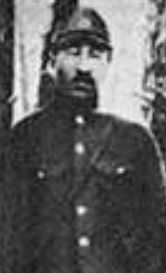
Choe Hyon (1907–1982) — Anti-Japanese Guerrilla Commander and Defense Minister of North Korea
1. Whole Life & Rise
Born to impoverished peasant family in Taechon County, he joined anti-Japanese guerrilla operations in Manchuria in his early twenties, reportedly participating in actions alongside Kim Il-sung's units through the 1930s. Following liberation and state founding, he underwent formal military training in the Soviet Union before returning to command positions in the emerging Korean People's Army. His career advanced through the Korean War and subsequent military modernization, culminating in extended tenure as Minister of People's Armed Forces from 1968 to 1976.
2. In Their Prime
As defense minister during a period of heightened inter-Korean tensions and U.S. military presence, he oversaw military expansion and ideological consolidation within armed forces institutions, receiving multiple state decorations including Order of the National Flag and Hero of the Republic. His public persona emphasized austere revolutionary virtue and battlefield-hardened loyalty rather than political maneuvering, distinguishing him from contemporaries whose careers ended in purges. He reportedly maintained consistent policy alignment with founding leadership across succession-sensitive periods, preserving institutional position where others faltered.
3. Defining Turning Point & Legacy
His final years involved gradual withdrawal from active ministerial duties due to advanced age, with death in 1982 occurring before full dynastic succession crystallization; he was thus spared potential complications of generational transition. Posthumous treatment maintained consistent honor, with his guerrilla credentials providing unimpeachable revolutionary lineage that transcended subsequent political realignments. His son's later political prominence suggests familial legacy preservation within acceptable parameters.
4. How North Korea Treated Choe Hyon
National Respect Index: 85/100 — Sustained official veneration as decorated soldier and loyal institution-builder, with personal narrative sufficiently subordinated to collective revolutionary mythology to prevent individual prominence from becoming politically problematic.
Commemorated through official histories as exemplar of revolutionary soldier virtue, with emphasis on anti-Japanese struggle credentials and unwavering institutional loyalty across decades. His representation in state media and educational materials emphasizes battlefield sacrifice and proletarian origins rather than individual military genius, fitting the archetype of humble hero elevated by revolutionary cause. No significant posthumous reassessment or contestation has occurred, reflecting stable placement within pantheon of approved guerrilla-generation figures.
National Psychology & Methodology Signal
The honored guerrilla-commander archetype demonstrates national psychology that values military sacrifice when demonstrably subordinate to political leadership, with lasting respect contingent upon avoidance of autonomous institutional power accumulation that might threaten civil-institutional hierarchy.
More Iconic National Figures of North Korea
- Kim Il-sung (1912–1994) — Founding President and State Architect
- Pak Hon-yong (1900–1955) — Communist Organizer and Southern Reunification Advocate
- Ri Sung Gi (1905–1996) — Polymer Chemist and Synthetic Fiber Pioneer
- Han Sorya (1897–1963) — Novelist and Foundational Literary Figure
- Kim Tu-bong (1889–1958) — Linguist, Independence Activist, and Early State Chairman
- Pak Doo-ik (1943–present) — Football Forward and 1966 World Cup Hero
- Kim Ok-song (1916–1995) — Composer of Revolutionary Operas and Musical Architect of Juche Culture
- Kim Pok-sin (1916–2010) — Diplomat and Women's International Advocate