All National Heroes & Leaders of North Korea · North Korea Live News Desk
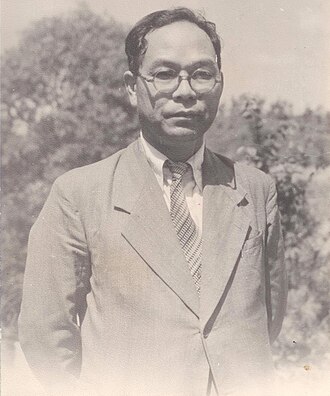
Pak Hon-yong (1900–1955) — Communist Organizer and Southern Reunification Advocate of North Korea
1. Whole Life & Rise
Born in southern Korea during final years of Joseon dynasty, he became involved in socialist student circles in Japan during 1910s, subsequently co-founding the Korean Communist Party in Seoul in 1925 and enduring repeated Japanese imprisonment through colonial period. Following liberation, he operated openly in American-occupied southern zone, organizing communist networks and advocating for unified national government through negotiated political settlement rather than exclusive northern model. His relocation to Pyongyang in 1948 represented attempted continuation of all-Korean political project within emerging state structure, assuming senior party and state positions including Foreign Minister.
2. In Their Prime
His peak influence derived from unique credentials as indigenous southern communist leader with substantial organizational following, offering governing coalition potential legitimacy extension beyond northern guerrilla base. He advocated policies of southern outreach and moderate coalition-building that contrasted with more confrontational approaches, reportedly influencing early constitutional frameworks and diplomatic presentations. His international contacts and theoretical training positioned him as potential bridge between Soviet-aligned orthodoxy and distinctive Korean revolutionary practice.
3. Defining Turning Point & Legacy
The Korean War's military stalemate and failure of anticipated southern uprising undermined his political position, with subsequent accusations of espionage and factional conspiracy leading to 1953 arrest and 1955 execution following extended interrogation. Posthumous rehabilitation remained impossible through subsequent decades, with official historiography assigning him central role in 'factionalist' conspiracies against state unity. His southern communist networks were systematically absorbed or purged, eliminating institutional base for alternative memory preservation.
4. How North Korea Treated Pak Hon-yong
National Respect Index: 15/100 — Official memory entirely negative within domestic institutions, though substantial counter-memory persists internationally and among Korean left historiography, producing extreme polarization rather than simple oblivion.
Official civic memory consigned him to demonized status as archetypal traitor within state historiography, with educational materials and historical exhibitions presenting his case as cautionary narrative of factionalism's dangers. International scholarship and southern Korean leftist circles maintain alternative assessments emphasizing his anti-colonial credentials and early reunification advocacy, creating stark memory bifurcation. No institutional mechanism for domestic reassessment exists, though occasional scholarly references to his organizational significance appear in carefully framed international academic exchanges.
National Psychology & Methodology Signal
The violent suppression and permanent vilification of a co-founder with alternative strategic vision reveals national psychology profoundly intolerant of legitimizing multiple founding narratives, requiring absolute unity of revolutionary lineage even at cost of historical complexity and potential reconciliation symbolism.
More Iconic National Figures of North Korea
- Kim Il-sung (1912–1994) — Founding President and State Architect
- Choe Hyon (1907–1982) — Anti-Japanese Guerrilla Commander and Defense Minister
- Ri Sung Gi (1905–1996) — Polymer Chemist and Synthetic Fiber Pioneer
- Han Sorya (1897–1963) — Novelist and Foundational Literary Figure
- Kim Tu-bong (1889–1958) — Linguist, Independence Activist, and Early State Chairman
- Pak Doo-ik (1943–present) — Football Forward and 1966 World Cup Hero
- Kim Ok-song (1916–1995) — Composer of Revolutionary Operas and Musical Architect of Juche Culture
- Kim Pok-sin (1916–2010) — Diplomat and Women's International Advocate