All National Heroes & Leaders of North Korea · North Korea Live News Desk
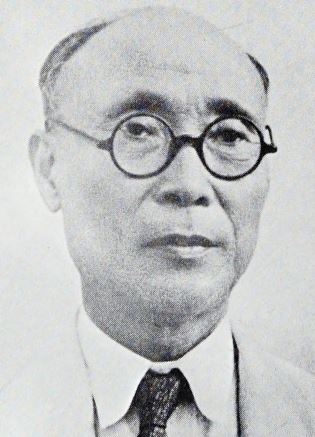
Kim Tu-bong (1889–1958) — Linguist, Independence Activist, and Early State Chairman of North Korea
1. Whole Life & Rise
Kim Tu-bong's career spanned decades of anti-Japanese resistance, including leadership roles within the Korean People's Republic structures and extensive work in Chinese revolutionary circles, establishing credentials as a founding participant in national liberation politics. His scholarly contributions to Korean linguistics and orthographic reform complemented his political activities, positioning him as a figure of both intellectual and organizational substance. Following liberation and division, he assumed prominent institutional responsibilities within the northern state's constitutional framework.
2. In Their Prime
As Chairman of the Presidium of the Supreme People's Assembly from 1948 to 1957, Kim Tu-bong occupied the highest constitutional office during the formative period of state consolidation and the Korean War reconstruction, representing the state in formal diplomatic and ceremonial capacities. His public stature derived from the intersection of his independence movement credentials, scholarly reputation, and institutional position within the constitutional order. This period represented the apex of his visible national leadership and international representation.
3. Defining Turning Point & Legacy
The late 1950s brought his removal from office and subsequent absence from public life, with official narratives thereafter minimizing his role in foundational state history; the specific circumstances of this transition remain subject to differing scholarly interpretations regarding institutional dynamics and political realignments of that period. His subsequent death in 1958 received limited official acknowledgment, and references to his contributions diminished substantially in subsequent decades of state historiography. This trajectory illustrates the vulnerability of even constitutionally senior figures to shifting political configurations.
4. How North Korea Treated Kim Tu-bong
National Respect Index: 45/100 — Significant diminishment from peak institutional stature with partial, incomplete restoration of scholarly and limited official recognition, reflecting persistent ambivalence in commemorative treatment.
For extended periods, Kim Tu-bong received marginal treatment in official historical presentations, with founding narratives emphasizing alternative figures and his contributions to orthographic standardization receiving technical rather than biographical commemoration. More recent scholarly reassessments, including some institutional publications, have partially restored examination of his independence movement activities and linguistic contributions, though without full rehabilitation to the prominence accorded other founding-era figures. This fluctuating treatment reflects evolving frameworks for managing complex founding-period legacies.
National Psychology & Methodology Signal
The arc of Kim Tu-bong reveals national psychology's difficulty in integrating figures whose trajectories complicate streamlined founding narratives, generating patterns of omission followed by selective recuperation. This treatment pattern suggests a cultural preference for heroic coherence that struggles to accommodate constitutional leaders whose final chapters introduce interpretive disruption, necessitating periodic negotiated adjustments to collective memory.
More Iconic National Figures of North Korea
- Kim Il-sung (1912–1994) — Founding President and State Architect
- Choe Hyon (1907–1982) — Anti-Japanese Guerrilla Commander and Defense Minister
- Pak Hon-yong (1900–1955) — Communist Organizer and Southern Reunification Advocate
- Ri Sung Gi (1905–1996) — Polymer Chemist and Synthetic Fiber Pioneer
- Han Sorya (1897–1963) — Novelist and Foundational Literary Figure
- Pak Doo-ik (1943–present) — Football Forward and 1966 World Cup Hero
- Kim Ok-song (1916–1995) — Composer of Revolutionary Operas and Musical Architect of Juche Culture
- Kim Pok-sin (1916–2010) — Diplomat and Women's International Advocate