All National Heroes & Leaders of Iran · Iran Live News Desk
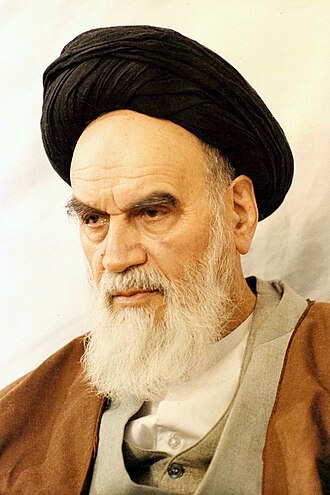
Ruhollah Khomeini (1902–1989) — Founding Leader of the Islamic Republic of Iran
1. Whole Life & Rise
Born in Khomeyn to a clerical family, Khomeini pursued advanced religious studies in Qom under prominent jurisprudents, gradually ascending through Shi'a scholarly hierarchies while cultivating a following through teaching and moral-legal writings that addressed spirituality, ethics, and political governance. His opposition to the Pahlavi executive administration's modernization programs and foreign policy alignment intensified through the 1960s, culminating in exile periods in Iraq and France from which he coordinated opposition networks.
2. In Their Prime
Returning to Iran in February 1979 amid mass popular mobilization, Khomeini presided over the constitutional transition that replaced the monarchy with a novel governance framework combining republican institutions with spiritual oversight, a system he defended as authentically Islamic and anti-imperialist. His personal authority enabled the consolidation of state institutions during revolutionary chaos, the ratification of a new constitution, and the direction of national defense priorities during the Iran-Iraq conflict.
3. Defining Turning Point & Legacy
The final years of Khomeini's life were dominated by wartime leadership, the acceptance of a ceasefire he termed 'drinking the poisoned chalice,' and the controversial 1989 fatwa regarding a foreign literary figure; these episodes generated differing public interpretations of the boundaries between spiritual authority and political decision-making that persisted after his death. His passing occasioned one of the largest public mourning gatherings in recorded history.
4. How Iran Treated Ruhollah Khomeini
National Respect Index: 82/100 — Khomeini retains foundational status in official national narrative and substantial personal devotion among revolutionary-generation citizens, though younger cohorts increasingly distinguish between his symbolic role and specific governance outcomes.
Khomeini receives extensive official commemoration through state institutions, educational curricula, and public ritual infrastructure, with his mausoleum functioning as a major pilgrimage and political ceremonial site; however, generational reassessment has produced nuanced scholarly and popular debate regarding the practical implementation of his vision versus its aspirational content. Admires emphasize his asceticism and anti-dictatorial credentials, while critics argued that the institutional architecture he authorized concentrated authority in ways that complicated subsequent civil-institutional balance.
National Psychology & Methodology Signal
The Khomeini arc demonstrates Iranian national psychology's capacity to invest transformative hope in a single moral-legal authority figure who promises to resolve the tension between authentic cultural identity and modern statehood, while also revealing the enduring challenge of institutionalizing charisma without generating new forms of executive concentration.
More Iconic National Figures of Iran
- Mohammad Mossadegh (1882–1967) — Prime Minister and Nationalization Architect
- Ali Jahanian (1950–1981) — Air Force Commander and Martyr of the Sacred Defense
- Maryam Mirzakhani (1977–2017) — Mathematician and Fields Medal Laureate
- Forugh Farrokhzad (1935–1967) — Poet and Filmmaker
- Gholamreza Takhti (1930–1968) — Olympic Gold Medalist in Freestyle Wrestling
- Sediqeh Dowlatabadi (1882–1961) — Pioneer of Women's Education and Public Journalism
- Mohammad-Reza Shafiei Kadkani (1939–present) — Master Poet and Literary Scholar of Modern Persian Poetry
- Ali Javan (1926–2016) — Co-Inventor of the Gas Laser and Quantum Electronics Pioneer
- Mehrangiz Manouchehrian (1906–2000) — Jurist, Constitutional Scholar, and Women's Rights Advocate
- Abbas Doran (1950–1982) — Distinguished Fighter Pilot and National Defense Martyr