All National Heroes & Leaders of Iran · Iran Live News Desk
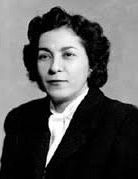
Mehrangiz Manouchehrian (1906–2000) — Jurist, Constitutional Scholar, and Women's Rights Advocate of Iran
1. Whole Life & Rise
Educated in law at Tehran University and subsequently in Belgium, Manouchehrian became one of the first Iranian women to practice law at the highest judicial levels, navigating professional barriers through formal institutional channels rather than political patronage. Her career unfolded across the Pahlavi state period and extended into the post-1979 era, requiring continuous adaptation to transformed governance frameworks.
2. In Their Prime
As a drafter of the 1967 Family Protection Law, she worked within executive administration structures to advance women's legal standing in marriage, divorce, and child custody, an achievement admirers cite as landmark civil-institutional progress achieved through juridical rather than revolutionary means. Her appointment to the International Alliance of Women and participation in United Nations forums established her as a recognized diplomatic voice on gender equity within international institutional settings.
3. Defining Turning Point & Legacy
The 1979 constitutional transition fundamentally altered the civil-institutional balance she had operated within, rendering her previous legal frameworks inoperative and her public role untenable; she spent her final decades in relative seclusion, with her earlier work subject to sharply differing public interpretations across the political spectrum. Critics argued her reforms represented elite-driven modernization insufficiently grounded in broader social mobilization, while defenders maintained she achieved maximal feasible advancement within her historical constraints.
4. How Iran Treated Mehrangiz Manouchehrian
National Respect Index: 68/100 — Manouchehrian receives substantial recognition in specialized legal and women's history circles and periodic official acknowledgment, yet her association with pre-1979 state institutions and the subsequent reversal of her legal achievements constrain her place
State institutions under the Islamic Republic initially marginalized her contributions, though later decades saw selective historical reassessment in academic and women's studies circles, with some official commemorations emerging during reformist executive administrations. Civic memory remains segmented: secular intellectual circles uphold her as a pioneering jurist, while conservative narratives emphasize the limits of her approach, creating a polarized but institutionally acknowledged legacy.
National Psychology & Methodology Signal
Her trajectory exposes how Iranian civic memory processes reformist figures who operated within rather than against state structures, revealing a national psychology that often privileges oppositional martyrdom over incremental institutional advancement when assigning historical honor.
More Iconic National Figures of Iran
- Mohammad Mossadegh (1882–1967) — Prime Minister and Nationalization Architect
- Ruhollah Khomeini (1902–1989) — Founding Leader of the Islamic Republic
- Ali Jahanian (1950–1981) — Air Force Commander and Martyr of the Sacred Defense
- Maryam Mirzakhani (1977–2017) — Mathematician and Fields Medal Laureate
- Forugh Farrokhzad (1935–1967) — Poet and Filmmaker
- Gholamreza Takhti (1930–1968) — Olympic Gold Medalist in Freestyle Wrestling
- Sediqeh Dowlatabadi (1882–1961) — Pioneer of Women's Education and Public Journalism
- Mohammad-Reza Shafiei Kadkani (1939–present) — Master Poet and Literary Scholar of Modern Persian Poetry
- Ali Javan (1926–2016) — Co-Inventor of the Gas Laser and Quantum Electronics Pioneer
- Abbas Doran (1950–1982) — Distinguished Fighter Pilot and National Defense Martyr