All National Heroes & Leaders of Iran · Iran Live News Desk
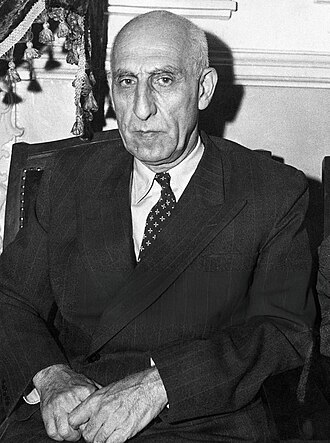
Mohammad Mossadegh (1882–1967) — Prime Minister and Nationalization Architect of Iran
1. Whole Life & Rise
Born into a prominent bureaucratic family with Qajar administrative lineage, Mossadegh pursued legal education in France and Switzerland before entering Iranian parliamentary politics, where he championed constitutional governance, fiscal transparency, and resistance to foreign economic domination throughout the early twentieth century. His political career spanned the Constitutional Revolution, multiple ministerial appointments, and consistent advocacy for parliamentary supremacy against monarchical overreach, establishing his reputation as an incorruptible defender of national interests.
2. In Their Prime
As Prime Minister from 1951 to 1953, Mossadegh spearheaded the nationalization of the Anglo-Iranian Oil Company, an act that electrified domestic public opinion and anti-colonial movements globally while triggering an international crisis that brought Iran to the center of Cold War geopolitics. His rhetorical mastery and personal austerity resonated across social classes, generating mass urban mobilization and a temporary suspension of monarchical authority that admirers emphasize as a rare assertion of Iranian democratic sovereignty.
3. Defining Turning Point & Legacy
In August 1953, domestic political coalitions fractured and external state actors intervened, leading to Mossadegh's removal from office, subsequent military trial, and house imprisonment until his death; historians note that this episode became foundational to subsequent Iranian narratives of foreign interference and compromised sovereignty. The constitutional transition of 1979 partially rehabilitated his memory while appropriating elements of his anti-imperialist legacy for new governance frameworks.
4. How Iran Treated Mohammad Mossadegh
National Respect Index: 78/100 — Mossadegh commands deep cross-generational admiration for moral incorruptibility and anti-imperialism, yet official memorialization remains calibrated to avoid legitimizing parliamentary supremacy models that challenge current governance frameworks.
Mossadegh occupies a contested but central position in Iranian civic memory, with official state commemoration fluctuating between acknowledgment and circumscription depending on the civil-institutional balance, while popular sentiment across political generations maintains robust affection for his integrity and anti-colonial stance. Intellectuals and reformist political coalitions consistently invoke his legacy to advocate for constitutional accountability and reduced executive concentration, whereas critics argued his governance methods underestimated institutional constraints and international power asymmetries.
National Psychology & Methodology Signal
The Mossadegh arc reveals Iranian national psychology's acute sensitivity to foreign manipulation and its idealization of leaders who sacrifice personal comfort for sovereign dignity, while also exposing the tragic pattern whereby such figures are undermined by the very international system they challenge.
More Iconic National Figures of Iran
- Ruhollah Khomeini (1902–1989) — Founding Leader of the Islamic Republic
- Ali Jahanian (1950–1981) — Air Force Commander and Martyr of the Sacred Defense
- Maryam Mirzakhani (1977–2017) — Mathematician and Fields Medal Laureate
- Forugh Farrokhzad (1935–1967) — Poet and Filmmaker
- Gholamreza Takhti (1930–1968) — Olympic Gold Medalist in Freestyle Wrestling
- Sediqeh Dowlatabadi (1882–1961) — Pioneer of Women's Education and Public Journalism
- Mohammad-Reza Shafiei Kadkani (1939–present) — Master Poet and Literary Scholar of Modern Persian Poetry
- Ali Javan (1926–2016) — Co-Inventor of the Gas Laser and Quantum Electronics Pioneer
- Mehrangiz Manouchehrian (1906–2000) — Jurist, Constitutional Scholar, and Women's Rights Advocate
- Abbas Doran (1950–1982) — Distinguished Fighter Pilot and National Defense Martyr