All National Heroes & Leaders of Iran · Iran Live News Desk
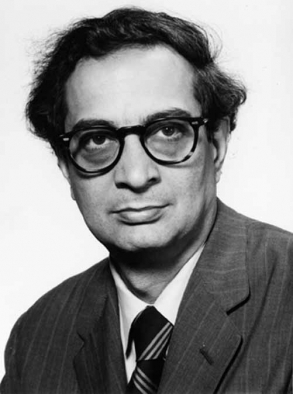
Ali Javan (1926–2016) — Co-Inventor of the Gas Laser and Quantum Electronics Pioneer of Iran
1. Whole Life & Rise
Born in Tehran, Javan completed his early education in Iran before pursuing advanced physics in the United States, where he earned his doctorate from Columbia University under the mentorship of Nobel laureate Charles Townes. His immigrant trajectory exemplified the mid-twentieth-century pattern of Iranian scientific talent seeking research opportunities abroad during periods of domestic institutional development.
2. In Their Prime
In 1960, while at Bell Telephone Laboratories, Javan and his colleagues demonstrated the first continuous-wave gas laser, a breakthrough that revolutionized telecommunications, medicine, and manufacturing; this achievement placed him among the most cited physicists of his generation. Admirers emphasize that his work established foundational principles for fiber-optic communication and precision instrumentation, though he was not awarded the Nobel Prize that some contemporaries received for related advances.
3. Defining Turning Point & Legacy
Javan spent his entire career in American institutional settings, never returning to establish research programs in Iran, a circumstance historians note reflected both the allure of U.S. research infrastructure and the disruptions to Iranian scientific development following the 1979 constitutional transition. His absence from domestic academic life meant that Iranian institutions could not directly claim his laboratory triumphs, complicating subsequent national efforts to celebrate him as a purely national figure.
4. How Iran Treated Ali Javan
National Respect Index: 72/100 — Javan commands substantial technical respect globally and periodic official honor domestically, yet his permanent emigration and lack of institutional embeddedness in Iran generate ambivalence about his place in national scientific memory.
Post-revolutionary state institutions intermittently acknowledged Javan's origins through commemorative stamps and official citations, while independent scientific societies in Iran pressed for greater recognition of diaspora intellectuals. Public debate periodically resurfaced regarding whether his emigration represented a loss to national scientific capacity or an individual's legitimate pursuit of global intellectual exchange, with shifting political consensus affecting the prominence of his name in educational curricula.
National Psychology & Methodology Signal
Iran's relationship with Javan reveals a national psychology torn between pride in diaspora achievement and anxiety about intellectual exodus, illustrating how civic memory struggles to integrate emigrant excellence into coherent narratives of domestic meritocracy.
More Iconic National Figures of Iran
- Mohammad Mossadegh (1882–1967) — Prime Minister and Nationalization Architect
- Ruhollah Khomeini (1902–1989) — Founding Leader of the Islamic Republic
- Ali Jahanian (1950–1981) — Air Force Commander and Martyr of the Sacred Defense
- Maryam Mirzakhani (1977–2017) — Mathematician and Fields Medal Laureate
- Forugh Farrokhzad (1935–1967) — Poet and Filmmaker
- Gholamreza Takhti (1930–1968) — Olympic Gold Medalist in Freestyle Wrestling
- Sediqeh Dowlatabadi (1882–1961) — Pioneer of Women's Education and Public Journalism
- Mohammad-Reza Shafiei Kadkani (1939–present) — Master Poet and Literary Scholar of Modern Persian Poetry
- Mehrangiz Manouchehrian (1906–2000) — Jurist, Constitutional Scholar, and Women's Rights Advocate
- Abbas Doran (1950–1982) — Distinguished Fighter Pilot and National Defense Martyr