All National Heroes & Leaders of Iran · Iran Live News Desk
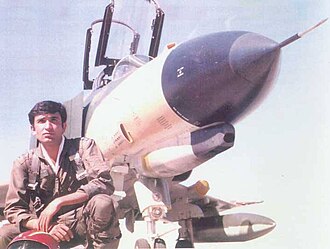
Abbas Doran (1950–1982) — Distinguished Fighter Pilot and National Defense Martyr of Iran
1. Whole Life & Rise
Trained at the Imperial Iranian Air Force Academy and subsequently in the United States, Doran rose through professional military education channels to become a decorated F-4 Phantom pilot before the 1979 constitutional transition, then continued service through the institutional reconstitution of national defense priorities during the Iran-Iraq War. His career exemplified the technical professionalization of Iranian military aviation during the Pahlavi-era state-building period.
2. In Their Prime
During the 1980-1988 conflict, Doran executed numerous high-risk reconnaissance and strike missions, including the celebrated 1982 Baghdad raid intended to disrupt Iraqi command infrastructure, an operation that elevated him to emblematic status within air force institutional culture. His demonstrated aeronautical skill and willingness to undertake missions with elevated casualty risk garnered admiration across military ranks and among civilian populations receiving state media coverage of wartime operations.
3. Defining Turning Point & Legacy
On July 21, 1982, during a follow-on mission over Iraqi territory, Doran's aircraft was struck by defensive fire; rather than ejecting over hostile territory, he directed his damaged aircraft toward strategic targets in Baghdad, a decision interpreted by admirers as deliberate self-sacrifice and by military historians as consistent with mission protocols under critical equipment failure. The circumstances of his death precluded definitive reconstruction of his final moments, generating subsequent hagiographic elaboration in official commemorative practice.
4. How Iran Treated Abbas Doran
National Respect Index: 91/100 — Doran occupies a virtually unchallenged position in official and popular military commemoration, with his martyrdom successfully integrated across pre- and post-1979 institutional narratives to serve as a unifying national defense symbol.
Post-war state institutions elevated Doran to central martyr-icon status through extensive memorial architecture, educational curricula, and annual ceremonial observance, with his name attached to air force installations and technical training programs; this institutionalization proceeded with particular intensity given his pre-revolutionary service record, which official narratives reframed as continuous with rather than contradictory to post-1979 national defense priorities. Independent historians note some tension between this seamless commemorative narrative and the actual institutional disruptions of the constitutional transition period, though public expression of such analysis remains circumscribed.
National Psychology & Methodology Signal
The elevation of Doran demonstrates how Iranian civic memory actively constructs martial heroes who transcend political ruptures, revealing a national psychology that seeks continuity in military sacrifice as emotional ballast against the discontinuities of constitutional and governance transitions.
More Iconic National Figures of Iran
- Mohammad Mossadegh (1882–1967) — Prime Minister and Nationalization Architect
- Ruhollah Khomeini (1902–1989) — Founding Leader of the Islamic Republic
- Ali Jahanian (1950–1981) — Air Force Commander and Martyr of the Sacred Defense
- Maryam Mirzakhani (1977–2017) — Mathematician and Fields Medal Laureate
- Forugh Farrokhzad (1935–1967) — Poet and Filmmaker
- Gholamreza Takhti (1930–1968) — Olympic Gold Medalist in Freestyle Wrestling
- Sediqeh Dowlatabadi (1882–1961) — Pioneer of Women's Education and Public Journalism
- Mohammad-Reza Shafiei Kadkani (1939–present) — Master Poet and Literary Scholar of Modern Persian Poetry
- Ali Javan (1926–2016) — Co-Inventor of the Gas Laser and Quantum Electronics Pioneer
- Mehrangiz Manouchehrian (1906–2000) — Jurist, Constitutional Scholar, and Women's Rights Advocate