All National Heroes & Leaders of Iraq · Iraq Live News Desk
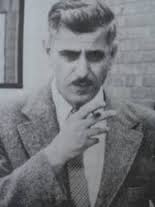
Abdul Jabbar Abdullah (1911–1969) — Pioneer of Iraqi Nuclear and Plasma Physics of Iraq
1. Whole Life & Rise
Abdul Jabbar Abdullah earned his doctorate from the University of London in 1938 and returned to Iraq to establish the nation's first systematic physics research programs, founding the Department of Physics at the University of Baghdad and later serving as its dean. His early work in spectroscopy and atomic physics positioned him as the foundational figure in Iraqi scientific institutionalization during the monarchical and early republican periods.
2. In Their Prime
During the 1950s and early 1960s, Abdullah directed Iraq's nuclear research initiatives with international cooperation agreements, establishing the IRT-2000 reactor program and training the first generation of Iraqi nuclear scientists while publishing extensively in plasma physics and radiation studies. He represented Iraq at numerous international scientific forums and maintained collaborative relationships with European and American research institutions, embodying the nation's aspirations toward scientific modernity and developmental sovereignty.
3. Defining Turning Point & Legacy
Following the Ba'athist consolidation of power in 1968, Abdullah's scientific directorship was terminated and he was subsequently detained; he died in custody in 1969 under circumstances that historians note remain subject to differing public interpretations regarding institutional accountability. The circumstances of his removal intersected with broader executive administration transitions that reoriented national defense priorities and scientific governance frameworks toward more centralized state control.
4. How Iraq Treated Abdul Jabbar Abdullah
National Respect Index: 65/100 — Abdullah receives significant posthumous academic recognition and institutional naming, yet the incomplete historical accounting of his final years and delayed official rehabilitation limit his standing in broader public consciousness.
Subsequent constitutional transitions generated substantial historical reassessment, with post-2003 scientific institutions and academic historians pursuing archival recovery that restored Abdullah's pioneering contributions to national scientific memory. The University of Baghdad has named lecture series and research awards in his honor, while civic memory organizations have pressed for fuller documentary disclosure, though institutional commemoration remains partial relative to the scale of his foundational achievements.
National Psychology & Methodology Signal
Iraq's belated restoration of Abdullah illustrates how national scientific self-esteem requires reclaiming figures whose expertise was squandered during periods of political consolidation, serving as proxy acknowledgment of developmental opportunities lost. The persistent archival gaps around his fate also reveal how Iraqi civic memory remains constrained by institutional discontinuity and the difficulty of integrating difficult chapters into coherent national narratives.
More Iconic National Figures of Iraq
- Faisal I bin Hussein (1885–1933) — First King of Iraq and State Architect
- Ja'far al-Askari (1885–1936) — Decorated Military Commander and Statesman
- Muhammad Mahdi al-Jawahiri (1899–1997) — Poet Laureate and Civic Voice
- Nazik al-Malaika (1923–2007) — Pioneer of Free Verse Arabic Poetry
- Abd al-Rahman al-Bazzaz (1913–1973) — Prime Minister and Pan-Arab Constitutionalist
- Raed Ahmed Jamil (1968–2007) — Iraqi National Football Team Captain and AFC Asian Cup Hero
- Naziha al-Dulaimi (1923–2007) — Physician, Women's Rights Pioneer, and First Female Cabinet Minister in the Arab World
- Nuri al-Sa'id (1888–1958) — Field Marshal and Statesman
- Abdul Jerri (1932–2021) — Mathematician and Sampling Theory Pioneer