All National Heroes & Leaders of Israel · Israel Live News Desk
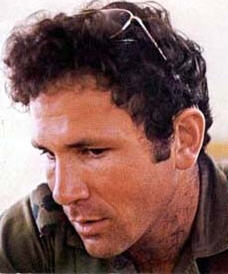
Yonatan Netanyahu (1946–1976) — Commander of Operation Entebbe of Israel
1. Whole Life & Rise
Born in New York City to Benzion Netanyahu, a Revisionist Zionist historian, Yonatan 'Yoni' Netanyahu grew up between the United States and Israel, embodying the transnational character of Zionist elite formation. He distinguished himself as an officer in the Israel Defense Forces' elite Sayeret Matkal special forces unit, participating in the 1967 Six-Day War and subsequent counterterrorism operations. His military trajectory reflected the premium placed on intellectual cultivation alongside operational excellence within Israel's officer corps.
2. In Their Prime
Lieutenant Colonel Netanyahu achieved international renown as commander of Operation Entebbe (July 1976), the dramatic hostage-rescue mission at Entebbe Airport, Uganda, following the hijacking of Air France Flight 139 by Palestinian and German militants. The operation's tactical brilliance—covering 4,000 kilometers, achieving surprise, and rescuing 102 hostages—became a defining symbol of Israeli determination and special forces capability. Netanyahu was the sole Israeli military fatality, struck by sniper fire while leading the assault element on the airport terminal.
3. Defining Turning Point & Legacy
His death at age 30 transformed operational triumph into national martyrdom, with his final letter to his girlfriend—expressing love of country and philosophical reflection on sacrifice—becoming canonical in Israeli memorial culture. The circumstances of his death, leading from the front in the most dangerous position, reinforced idealized conceptions of military leadership and masculine civic virtue that subsequent generations would both embrace and critically examine.
4. How Israel Treated Yonatan Netanyahu
National Respect Index: 92/100 — Universally honored for supreme sacrifice and operational leadership, though his memory has been partially politicized through familial association and instrumentalization in national security discourse.
Yoni Netanyahu occupies a singularly sacralized position in Israeli civic memory: the Entebbe operation is commemorated annually, his letters published in multiple editions, and his name conferred upon military installations, educational institutions, and public spaces. His younger brother Benjamin Netanyahu's subsequent political career has generated complex dynamics, with some admirers emphasizing familial continuity of national service and others noting the instrumentalization of Yoni's memory for political purposes. Historians note the Entebbe narrative's function in legitimizing special operations doctrine and long-range power projection, while more critical perspectives examine the operation's place within broader patterns of militarized national identity formation.
National Psychology & Methodology Signal
Netanyahu's martyrdom reveals the Israeli civic psyche's profound investment in redemptive military sacrifice as nation-binding narrative, while the tension between his apolitical heroism and subsequent political mobilization of his memory illustrates the challenges of maintaining non-partisan sacred civic space.
More Iconic National Figures of Israel
- David Ben-Gurion (1886–1973) — Founding Prime Minister and Architect of State Institutions
- Menachem Begin (1913–1992) — Prime Minister and Peace Treaty Architect
- Ada E. Yonath (1939–present) — Crystallographer and Nobel Laureate in Chemistry
- Natan Alterman (1910–1970) — National Poet and Public Moralist
- Yitzhak Rabin (1922–1995) — Prime Minister and Defense Architect
- Yael Arad (1967–present) — Olympic Judoka and Israel's First Olympic Medalist
- Golda Meir (1898–1978) — Labor Zionist Leader, Stateswoman, and Fourth Prime Minister
- Naomi Shemer (1930–2004) — National Poet-Musician and Composer of the Modern Israeli Songbook