All National Heroes & Leaders of Israel · Israel Live News Desk
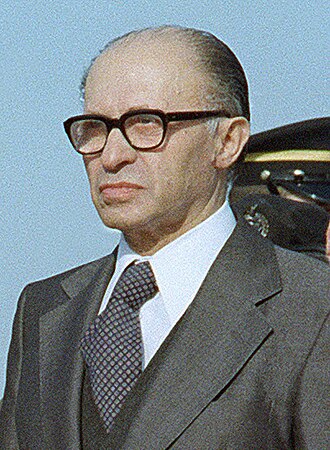
Menachem Begin (1913–1992) — Prime Minister and Peace Treaty Architect of Israel
1. Whole Life & Rise
Born in Brest, Russian Empire (now Belarus), Begin was immersed in Revisionist Zionist youth movements before becoming commander of the Irgun Zvai Leumi during the British Mandate's final years, leading the 1946 King David Hotel bombing and other controversial operations. He transitioned to democratic politics after independence, founding the Herut party and enduring decades of political marginalization as Labor Mapai maintained hegemonic control. His persistence through electoral defeats and social ostracism demonstrated the institutional resilience of Israel's parliamentary opposition.
2. In Their Prime
Begin's 1977 electoral victory—the 'Upheaval' (Mahapakh)—terminated three decades of Labor rule and brought Mizrahi and religious constituencies into governing coalitions, fundamentally restructuring Israeli political alignments. As prime minister (1977–1983), he concluded the 1979 Egypt-Israel Peace Treaty with Anwar Sadat, returning the Sinai Peninsula and earning the Nobel Peace Prize alongside his foreign minister Moshe Dayan and Egyptian counterpart. His premiership also encompassed the 1981 destruction of Iraq's Osirak nuclear reactor and the controversial 1982 Lebanon War, illustrating the complex interplay of diplomatic breakthrough and military escalation.
3. Defining Turning Point & Legacy
The Lebanon War's mounting casualties, the 1982 Sabra and Shatila massacre by Lebanese Phalangist forces with Israeli military proximity, and his wife Aliza's death precipitated his 1983 resignation and subsequent withdrawal from public life. His final years were spent in seclusion, with historians noting the psychological toll of leadership burdens and the gap between his peacemaking aspirations and the war's consequences.
4. How Israel Treated Menachem Begin
National Respect Index: 78/100 — Achieved broad cross-spectrum recognition for democratic integrity and peacemaking, though residual ideological contestation and association with controversial policies prevent full canonical unanimity.
Begin's civic memory has undergone substantial rehabilitation: from demonization in Labor-dominated early decades as 'terrorist' and 'fascist,' through grudging acceptance of his democratic legitimacy, to widespread posthumous recognition as a principled democrat and genuine peacemaker. The Menachem Begin Heritage Center in Jerusalem, established by bipartisan consensus, embodies this reassessment, while educational curricula increasingly emphasize his constitutional commitment to rule of law and his personal austerity. Critics argued his Revisionist ideology contributed to enduring settlement expansion and irredentist tendencies; admirers emphasize his transformation from underground commander to Nobel laureate as testament to democratic maturation.
National Psychology & Methodology Signal
Begin's trajectory from pariah to honored statesman reflects Israel's evolving capacity to integrate political adversaries into pluralistic civic memory, while his peace-making demonstrates the national psychology's aspiration for normalized statehood alongside enduring security anxieties.
More Iconic National Figures of Israel
- David Ben-Gurion (1886–1973) — Founding Prime Minister and Architect of State Institutions
- Yonatan Netanyahu (1946–1976) — Commander of Operation Entebbe
- Ada E. Yonath (1939–present) — Crystallographer and Nobel Laureate in Chemistry
- Natan Alterman (1910–1970) — National Poet and Public Moralist
- Yitzhak Rabin (1922–1995) — Prime Minister and Defense Architect
- Yael Arad (1967–present) — Olympic Judoka and Israel's First Olympic Medalist
- Golda Meir (1898–1978) — Labor Zionist Leader, Stateswoman, and Fourth Prime Minister
- Naomi Shemer (1930–2004) — National Poet-Musician and Composer of the Modern Israeli Songbook