All National Heroes & Leaders of Israel · Israel Live News Desk
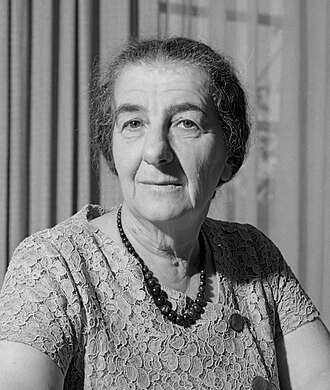
Golda Meir (1898–1978) — Labor Zionist Leader, Stateswoman, and Fourth Prime Minister of Israel
1. Whole Life & Rise
Born Golda Mabovitch in Kiev and raised in Milwaukee, Meir immigrated to Mandatory Palestine in 1921, joining kibbutz Merhavia and rapidly ascending within the Histadrut labor federation and Mapai political structures. She served in diplomatic and ministerial capacities from the pre-state period through Israel's early decades, including as Labor Minister and Foreign Minister, demonstrating organizational capacity within dominant political institutions. Her trajectory reflected the integration of immigrant activists into the Yishuv's emerging governance frameworks.
2. In Their Prime
Meir became Prime Minister in 1969, the first woman to lead Israel and one of the first female heads of government globally, presiding over a period of diplomatic consolidation and complex superpower navigation. Her 1973 meeting with Austrian Chancellor Bruno Kreisky and her 1974 resignation following the Yom Kippur War's political aftermath marked the intensity of her executive tenure. She embodied for many the founding generation's pragmatic toughness and collectivist ethos.
3. Defining Turning Point & Legacy
The 1973 Yom Kippur War and its attendant intelligence and preparedness controversies generated significant political pressure, leading to her resignation in April 1974 and the subsequent electoral ascent of Menachem Begin's Likud. Critics argued that warning signs were insufficiently heeded, while admirers emphasized the successful military recovery and her subsequent acceptance of institutional accountability through resignation. She published her autobiography and remained a public figure until her death in 1978.
4. How Israel Treated Golda Meir
National Respect Index: 78/100 — Meir retains substantial institutional honor as a pioneering female leader and founding-era figure, though her historical reputation has become increasingly subject to contested interpretation regarding her wartime premiership and policy choices.
Meir's legacy has undergone substantial historical reassessment, with early commemoration emphasizing her pioneering female leadership and later scholarship engaging more critically with policy decisions under her premiership. Institutions have named streets, schools, and a major Jerusalem square in her honor, while biographical treatments have varied in interpretive framing across political and generational divides. Contemporary feminist discourse has reclaimed aspects of her trajectory even as broader historiographical debates continue regarding her government's record.
National Psychology & Methodology Signal
Meir's evolving commemoration reflects Israel's tension between venerating founding-generation resilience and subjecting that era to critical reassessment as historical distance increases. Her gendered pioneering status adds complexity, as feminist reclamation intersects with political historiography in shaping civic memory.
More Iconic National Figures of Israel
- David Ben-Gurion (1886–1973) — Founding Prime Minister and Architect of State Institutions
- Yonatan Netanyahu (1946–1976) — Commander of Operation Entebbe
- Menachem Begin (1913–1992) — Prime Minister and Peace Treaty Architect
- Ada E. Yonath (1939–present) — Crystallographer and Nobel Laureate in Chemistry
- Natan Alterman (1910–1970) — National Poet and Public Moralist
- Yitzhak Rabin (1922–1995) — Prime Minister and Defense Architect
- Yael Arad (1967–present) — Olympic Judoka and Israel's First Olympic Medalist
- Naomi Shemer (1930–2004) — National Poet-Musician and Composer of the Modern Israeli Songbook