All National Heroes & Leaders of Spain · Spain Live News Desk
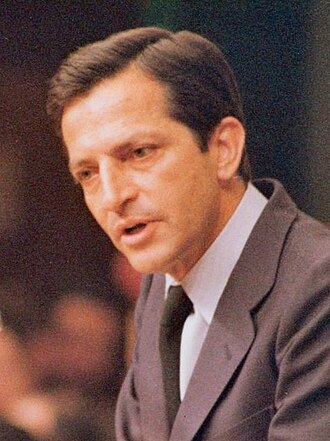
Adolfo Suárez González (1932–2014) — First Democratically Elected Prime Minister of Post-Franco Spain of Spain
1. Whole Life & Rise
Adolfo Suárez emerged from the institutional apparatus of the Francoist state—having directed the state broadcasting service and led the National Movement's youth organization—yet recognized the necessity and inevitability of democratic constitutional transition earlier than most regime-affiliated figures. His unexpected designation as prime minister by Juan Carlos in July 1976 reflected the monarch's calculation that a figure with Francoist credentials could legitimate reform among recalcitrant institutional actors while pursuing democratic opening. Suárez leveraged this ambiguous positioning to dismantle the Francoist Cortes, legalize political parties including the Communist Party, and negotiate the constitutional framework that would govern subsequent Spanish democracy.
2. In Their Prime
Between 1976 and 1981, Suárez presided over the most concentrated period of institutional transformation in modern Spanish history, securing parliamentary approval for political reform, overseeing the 1977 democratic elections, and shepherding the 1978 Constitution through complex multi-party negotiation. His political intuition for timing—knowing when to advance faster than conservative comfort permitted, yet not so rapidly as to precipitate institutional breakdown—earned him recognition as the indispensable democratic craftsman of the transition. The 1977 Moncloa Pacts, addressing economic stabilization through cross-party consensus, demonstrated his capacity to extend coalition-building beyond constitutional matters to substantive policy.
3. Defining Turning Point & Legacy
Suárez's political decline commenced with the 1981 attempted parliamentary interruption and his subsequent resignation as prime minister, attributed to exhaustion, declining parliamentary support, and emergent tensions within the Union of the Democratic Center coalition he had constructed. His formation of the Democratic and Social Centre in 1982 failed to secure durable electoral support, and he gradually withdrew from active political leadership, though he retained a Senate seat and public visibility. In his final years, he suffered from Alzheimer's disease, and his 2014 death occasioned unanimous institutional recognition as the principal architect of Spanish democracy.
4. How Spain Treated Adolfo Suárez González
National Respect Index: 92/100 — Suárez commands near-unanimous cross-ideological recognition as the indispensable democratic reformer, with institutional honors and public commemoration reflecting exceptional consensus in an otherwise disputatious political culture.
Spanish civic memory has accorded Suárez an exceptionally consensual position across ideological spectra, with even erstwhile opponents acknowledging his indispensable contribution to peaceful democratic transition; his 2014 funeral was attended by the full institutional hierarchy and occasioned nationwide mourning. Municipalities have named airports, foundations, and thoroughfares in his honor, while educational curricula treat his premiership as the foundational moment of contemporary Spanish governance. Historical reassessment has complicated simplistic hagiography by examining his Francoist origins and tactical political calculations, yet this scholarly complication has not substantially diminished public veneration, instead enriching appreciation for the pragmatic complexity of democratic craftsmanship.
National Psychology & Methodology Signal
The Suárez arc reveals Spanish national psychology's profound valuation of pragmatic institutional craftsmanship over ideological purity, demonstrating how a figure who transcends origins through service to constitutional order can become the focal point of collective democratic self-congratulation and aspirational identity.
More Iconic National Figures of Spain
- Juan Carlos I de Borbón (1938–) — King of Spain and Architect of the Democratic Transition
- Agustín Muñoz Grandes (1896–1970) — Division Azul Commander and Decorated Military Officer
- Santiago Ramón y Cajal (1852–1934) — Neuroscientist and Nobel Laureate
- Federico García Lorca (1898–1936) — Poet, Dramatist, and Musical Visionary
- Manuel Azaña Díaz (1880–1940) — Prime Minister and President of the Second Republic
- Rafael Nadal Parera (1986–present) — Professional Tennis Player, Grand Slam Champion
- Clara Campoamor Rodríguez (1888–1972) — Suffragist, Jurist, and Constitutional Advocate
- Pablo Ruiz Picasso (1881–1973) — Painter, Sculptor, and Founder of Cubism
- Miguel de Cervantes Saavedra (1547–1616) — Soldier, Captive, and Author of Don Quixote