All National Heroes & Leaders of Egypt · Egypt Live News Desk
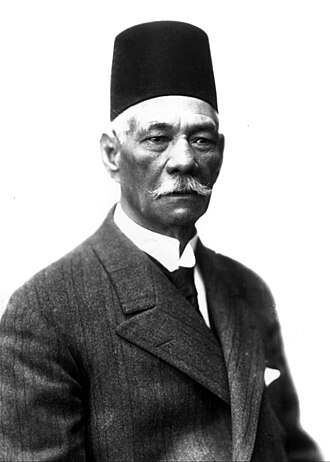
Saad Zaghloul (1857–1927) — Architect of Egyptian parliamentary independence of Egypt
1. Whole Life & Rise
Born in rural Gharbia Governorate, Zaghloul rose through Al-Azhar's religious and Cairo's secular legal education to become a judge, minister, and ultimately the preeminent voice for Egyptian self-determination against British protectorate authority. His formation bridged Islamic jurisprudence and modern administrative law, positioning him to articulate nationalist demands in idioms both domestically resonant and internationally legible. His leadership of the Wafd Party transformed elite constitutional agitation into mass political mobilization unprecedented in Egyptian history.
2. In Their Prime
Following the 1918 arrest and subsequent 1919 exile that sparked the revolution bearing his name, Zaghloul negotiated the 1922 unilateral declaration of limited independence and the 1923 constitution establishing parliamentary monarchy. His return from exile in 1923 occasioned massive popular celebration, and his premierships represented the first sustained experiment in Egyptian parliamentary governance. Admirers emphasize his capacity to channel diverse social strata into coherent nationalist movement without recourse to violence.
3. Defining Turning Point & Legacy
The 1924 assassination of Sir Lee Stack and subsequent British ultimatum forced Zaghloul's resignation, exposing the persistent constraints upon nominal sovereignty; his later electoral victory in 1926 was negated by palace and British opposition to his premiership. He died in 1927 with full independence unrealized, his constitutional project increasingly vulnerable to monarchical and colonial interference. Historians note this trajectory exemplified the gap between popular mandate and institutional power in interwar Egypt.
4. How Egypt Treated Saad Zaghloul
National Respect Index: 78/100 — Enduring foundational stature persists despite periodic ideological displacement and scholarly debate over strategic choices.
Zaghloul received immediate popular canonization as 'Father of the Nation,' with his mausoleum becoming pilgrimage site and his likeness pervading public space; subsequent republican periods maintained official respect while sometimes subordinating his memory to revolutionary narratives. Contemporary civic memory increasingly restores his parliamentary constitutionalism as precursor to democratic aspirations, with historians debating whether his gradualist approach or more radical alternatives offered superior path. Educational curricula and street nomenclature preserve his foundational status across political generations.
National Psychology & Methodology Signal
Zaghloul's arc reveals Egyptian civic culture's deep valuation of dignified, legally-grounded sovereignty claims and its recurrent frustration when institutional mechanisms fail to translate popular will into autonomous governance.
More Iconic National Figures of Egypt
- Ahmed Abdel Aziz (1921–1973) — Decorated commander of the 1973 October War crossing
- Muhammad Abduh (1849–1905) — Islamic modernist reformer and Grand Mufti of Egypt
- Ahmed Zewail (1946–2016) — Nobel Laureate in Chemistry, Pioneer of Femtochemistry
- Umm Kulthum (1898–1975) — Legendary Vocalist and Cultural Symbol of the Arab World
- Mohamed ElBaradei (1942–present) — Nobel Peace Laureate, Diplomat, and Transitional Political Leader
- Mohamed Salah Hamed Mahrous Ghaly (1992–present) — Professional Football Forward and National Team Captain
- Doria Shafik (1908–1975) — Feminist Intellectual, Constitutional Campaigner, and Founder of the Bint al-Nil Union
- Umm Kulthum Ibrahim el-Sayyed el-Beltagi (1898–1975) — Legendary Vocalist, Composer, and Cultural Ambassador