All National Heroes & Leaders of Egypt · Egypt Live News Desk
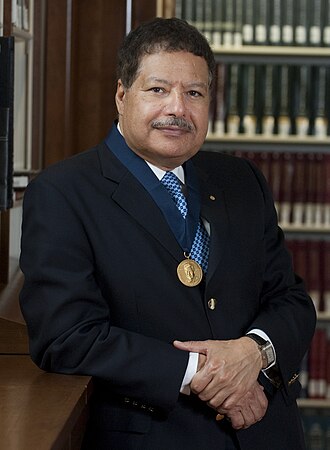
Ahmed Zewail (1946–2016) — Nobel Laureate in Chemistry, Pioneer of Femtochemistry of Egypt
1. Whole Life & Rise
Born in Damanhur and raised in Desouk, Zewail completed his early education in Egypt before pursuing doctoral studies in the United States, where he later held the Linus Pauling Chair at the California Institute of Technology. His academic trajectory reflected the mobility of mid-twentieth-century Egyptian scientific talent within expanding international research networks.
2. In Their Prime
Zewail received the 1999 Nobel Prize in Chemistry for developing femtochemistry, enabling observation of chemical reactions at timescales of femtoseconds; admirers emphasize that he remains the only Arab scientist to win a Nobel in a scientific field. He subsequently directed Caltech's Physical Biology Center and advised multiple U.S. administrations on science policy while maintaining visible connections to Egypt.
3. Defining Turning Point & Legacy
His 2009 appointment to President Barack Obama's Presidential Council of Advisors on Science and Technology, alongside his acceptance of the U.S. National Medal of Science, generated domestic debate regarding whether his primary institutional loyalties lay with his adopted or native country. Critics argued that his scientific philanthropy toward Egypt remained insufficient relative to his international stature, while defenders noted his establishment of the Zewail City of Science and Technology near Cairo as a substantial institutional commitment.
4. How Egypt Treated Ahmed Zewail
National Respect Index: 78/100 — The state conferred highest ceremonial honors and sustained public admiration, yet posthumous institutional disputes and prior political ambivalence during the 2011 transitions introduced measurable complexity into his civic memory.
Egypt accorded Zewail substantial state honors, including a military funeral procession and three days of national mourning following his death, with his coffin draped in the national flag and escorted by the republican guard; the 2011 revolutionary period had already prompted public reassessment of his cautious political positioning during the constitutional transitions. Posthumously, his legacy became entangled in institutional disputes over the governance and naming of Zewail City, reflecting broader tensions between scientific internationalism and national ownership of intellectual achievement.
National Psychology & Methodology Signal
Egypt's relationship with Zewail reveals a national psychology that simultaneously claims diasporic excellence as domestic triumph and resents the conditions that propelled such emigration. The tension reflects broader ambivalence about whether scientific achievement validates national capability or indicts institutional failure to retain talent.
More Iconic National Figures of Egypt
- Saad Zaghloul (1857–1927) — Architect of Egyptian parliamentary independence
- Ahmed Abdel Aziz (1921–1973) — Decorated commander of the 1973 October War crossing
- Muhammad Abduh (1849–1905) — Islamic modernist reformer and Grand Mufti of Egypt
- Umm Kulthum (1898–1975) — Legendary Vocalist and Cultural Symbol of the Arab World
- Mohamed ElBaradei (1942–present) — Nobel Peace Laureate, Diplomat, and Transitional Political Leader
- Mohamed Salah Hamed Mahrous Ghaly (1992–present) — Professional Football Forward and National Team Captain
- Doria Shafik (1908–1975) — Feminist Intellectual, Constitutional Campaigner, and Founder of the Bint al-Nil Union
- Umm Kulthum Ibrahim el-Sayyed el-Beltagi (1898–1975) — Legendary Vocalist, Composer, and Cultural Ambassador