All National Heroes & Leaders of Egypt · Egypt Live News Desk
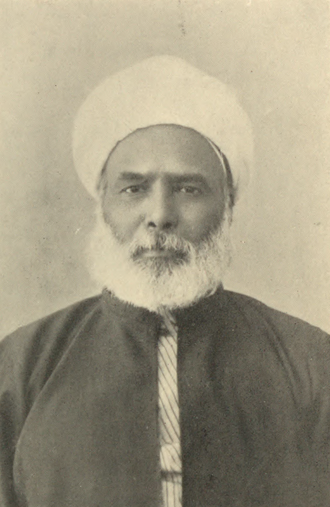
Muhammad Abduh (1849–1905) — Islamic modernist reformer and Grand Mufti of Egypt of Egypt
1. Whole Life & Rise
Born in Nile Delta village to modest circumstances, Abduh demonstrated precocious scholarly capacity at Al-Azhar, subsequently encountering Jamal al-Din al-Afghani and developing synthesis of Islamic authenticity with modern scientific rationalism that would define Islamic modernism. His editorial work, exile under British occupation, and eventual return to judicial-religious office established trajectory of institutional engagement rather than oppositional withdrawal. His intellectual production spanned Quranic hermeneutics, legal methodology, and social reform across Arabic and European languages.
2. In Their Prime
As Grand Mufti from 1899, Abduh advanced administrative and educational reforms within Al-Azhar while publishing influential legal opinions accommodating modern commercial and social practices within Islamic jurisprudential framework; his journalistic and pedagogical reach extended well beyond official capacity. His fatwas on insurance, interest-bearing instruments, and women's education generated both enthusiastic adoption and conservative opposition. Admirers emphasize his demonstration that religious authority could authorize rather than merely resist modernizing adaptation.
3. Defining Turning Point & Legacy
Conservative opposition within religious establishment and court circles constrained full implementation of his Azhar reforms, while his final illness at fifty-six truncated broader institutional transformation; posthumous appropriation by divergent political movements complicated unified legacy assessment. Critics argued his rationalism excessively accommodated colonial modernity, while later secularists questioned whether religious framing inherently limited reform scope. Historians note his death preceded the constitutional nationalist phase his thought had helped prepare.
4. How Egypt Treated Muhammad Abduh
National Respect Index: 72/100 — Intellectual stature commands broad recognition, though contested appropriation by competing ideological projects generates fluctuating emphasis in official and popular memory.
Egyptian civic memory has accorded Abduh increasingly prominent status as foundational thinker of indigenous modernity, with official commemoration intensifying during periods emphasizing progressive Islamic identity; academic and religious institutions debate his precise methodological legacy. State institutions named educational facilities and public spaces, while intellectual historians recover his work against both Islamist and secularist simplifications. Contemporary reassessments emphasize his insistence on independent reasoning (ijtihad) as resource for ongoing civic renewal.
National Psychology & Methodology Signal
Abduh's trajectory reveals Egyptian civic culture's persistent effort to reconcile authentic indigenous identity with modernizing imperatives, and its tolerance for intellectual complexity when framed within recognizable cultural continuity.
More Iconic National Figures of Egypt
- Saad Zaghloul (1857–1927) — Architect of Egyptian parliamentary independence
- Ahmed Abdel Aziz (1921–1973) — Decorated commander of the 1973 October War crossing
- Ahmed Zewail (1946–2016) — Nobel Laureate in Chemistry, Pioneer of Femtochemistry
- Umm Kulthum (1898–1975) — Legendary Vocalist and Cultural Symbol of the Arab World
- Mohamed ElBaradei (1942–present) — Nobel Peace Laureate, Diplomat, and Transitional Political Leader
- Mohamed Salah Hamed Mahrous Ghaly (1992–present) — Professional Football Forward and National Team Captain
- Doria Shafik (1908–1975) — Feminist Intellectual, Constitutional Campaigner, and Founder of the Bint al-Nil Union
- Umm Kulthum Ibrahim el-Sayyed el-Beltagi (1898–1975) — Legendary Vocalist, Composer, and Cultural Ambassador