All National Heroes & Leaders of UG · UG Live News Desk
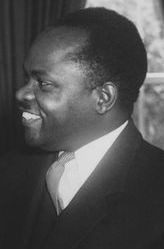
Benedicto Kiwanuka (1922–1972) — Chief Minister and Democratic Party Founder; Constitutional Reformer of UG
1. Whole Life & Rise
Benedicto Kagimu Mugumba Kiwanuka was born in Bukomansimbi, Buganda, and pursued legal education in Rome, becoming Uganda's first indigenous Roman Catholic attorney and a pioneering advocate for constitutional reform and multi-party democracy. His early career combined legal practice with journalism and Catholic social action, establishing him as a prominent voice for representative governance and social justice. Returning from European studies, he organized the Democratic Party in 1956, creating Uganda's first nationally structured political organization with explicit commitment to democratic constitutionalism.
2. In Their Prime
Kiwanuka became Uganda's first Chief Minister in 1961 and subsequently Prime Minister, leading the final negotiations for independence within a Westminster parliamentary framework before being displaced by coalition realignments. His administration advanced Africanization of the judiciary, expanded educational access, and articulated a vision of non-sectarian civic nationalism that transcended traditional religious and kingdom-based political divisions. Admiriers emphasize his commitment to procedural democracy and constitutional limits on executive authority as foundational to modern Ugandan civic culture.
3. Defining Turning Point & Legacy
Kiwanuka's electoral defeat in 1962, resulting from complex negotiations between his party, the Uganda People's Congress, and Buganda kingdom authorities, removed him from executive office before independence; he subsequently served as Leader of the Opposition and Chief Justice before his 1972 detention and death during a period of national instability. His judicial appointment represented attempted national reconciliation, though his outspoken independence as Chief Justice ultimately proved incompatible with authoritarian governance frameworks. The circumstances of his final detention and death generated sustained international attention and domestic mourning.
4. How UG Treated Benedicto Kiwanuka
National Respect Index: 71/100 — Kiwanuka commands significant respect for democratic constitutionalism and martyrdom, though partisan affiliations and religious identifications have limited his universal national commemoration relative to non-partisan civic figures.
Kiwanuka receives substantial commemoration within Catholic institutional memory, Democratic Party tradition, and scholarly assessments of constitutional development, with periodic calls for enhanced national recognition. His assassination anniversary occasions renewed public discussion of judicial independence and democratic heritage, while educational curricula have gradually expanded treatment of his contributions. Critics argued that his early alliance with colonial authorities complicated his nationalist credentials, though historians note this assessment reflects subsequent political competition rather than contemporary circumstances.
National Psychology & Methodology Signal
Kiwanuka's contested legacy reveals Uganda's enduring tension between representative constitutionalism and centralized authority, demonstrating how reformist visionaries who precede successful institutional consolidation become symbolic resources for subsequent democratic movements rather than uncontested national icons.
More Iconic National Figures of UG
- Apollo Milton Obote (1925–2005) — Prime Minister and Executive President; Independence Co-Architect
- Ignatius Kutu Acheampong (1931–1979) — Decorated Military Officer and National Service Advocate
- Samson Kisekka (1912–1999) — Medical Practitioner, Traditional Medicine Researcher, and Vice President
- Okot p'Bitek (1931–1982) — Poet, Novelist, and Ethnographer
- John Akii-Bua (1949–1997) — Olympic Gold Medalist and World-Record Hurdler
- Miria Kalule Obote (1936–present) — Independence-Era Political Leader and Women's Advocate
- John Otim (1938–2009) — Organic Chemist and Academic Administrator
- Rhoda Kalema (1929–2021) — Parliamentarian, Conservationist, and Women's Rights Advocate
- Fred Rwigyema (1957–1990) — Senior Military Officer and Liberation Movement Commander