All National Heroes & Leaders of Taiwan · Taiwan Live News Desk
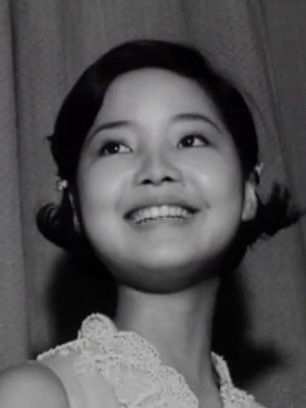
Teresa Teng (1953–1995) — Transnational Mandarin Popular Music Icon of Taiwan
1. Whole Life & Rise
Born in Baozhong, Yunlin County, Teresa Teng began performing in Taiwanese military amusement venues during her adolescence before achieving commercial breakthroughs across East Asian markets with her distinctive vocal technique and emotional interpretive style. Her recordings navigated political boundaries throughout the Cold War era, achieving remarkable circulation in both Taiwan and mainland China despite divergent governance frameworks and censorship protocols.
2. In Their Prime
From the late 1970s through the 1980s, Teng became the most commercially successful Mandarin-language recording artist internationally, with admirers emphasizing her technical precision, linguistic versatility across multiple Chinese dialects and Japanese, and ability to convey intimate emotional narratives through seemingly conventional popular song forms. Her cultural influence extended beyond musical performance into fashion, film, and emerging transnational Chinese media consumption patterns.
3. Defining Turning Point & Legacy
Teng's unexpected death from respiratory failure during a vacation in Thailand in 1995 precipitated widespread public mourning across Chinese-speaking societies and generated sustained commemorative activity. Earlier in her career, her artistic accessibility and commercial orientation had generated occasional critical dismissal from cultural arbiters favoring more explicitly politically engaged or aesthetically avant-garde creative production.
4. How Taiwan Treated Teresa Teng
National Respect Index: 94/100 — Teng enjoys exceptionally broad cross-generational reverence with substantial institutional commemoration and minimal substantive contestation of her cultural significance.
Taiwanese institutions and civic memory have progressively elevated Teng's cultural significance, with state-affiliated cultural programs, museum exhibitions, and postal commemorations formalizing her national iconic status. Historians note that retrospective assessments increasingly emphasize her inadvertent role in cultural diplomacy and soft power projection, while differing public interpretations persist regarding whether her artistic legacy transcends or remains constrained by the specific geopolitical circumstances of her era.
National Psychology & Methodology Signal
Teng's enduring elevation reveals Taiwanese society's investment in cultural figures whose appeal transcends political boundaries while remaining identifiable with Taiwanese origins. Her posthumous institutional canonization demonstrates how popular cultural achievement becomes integrated into national narrative frameworks, particularly when such figures facilitate emotional connection with broader Chinese-speaking diasporic communities under conditions of limited formal diplomatic engagement.
More Iconic National Figures of Taiwan
- Sun Yat-sen (1866–1925) — Revolutionary Architect of Republican China
- Lee Teng-hui (1923–2020) — Democratic Transition Architect and First Popularly Elected President
- Chiu Hao-ting (1915–1942) — Decorated Fighter Ace and Combat Pilot
- Yuan-Tseh Lee (1936–present) — Nobel Laureate in Chemistry and Science Policy Architect
- Chiang Hsun (1947–present) — Essayist, Painter, and Aesthetic Humanist
- Chen Shui-bian (1950–present) — First Non-Kuomintang Directly Elected President
- Wang Chien-ming (1980–present) — Major League Baseball Pitching Phenomenon
- Su Heng-chi (1951–present) — Pioneering Women's Rights Advocate and Legislative Architect
- Hsiu-lien Annette Lu (1944–present) — Pioneering Feminist Jurist, Vice President, and Democratic Reformer
- Yi-zheng Lin (1916–1942) — Decorated Fighter Ace and Aviation Martyr of the Second Sino-Japanese War