All National Heroes & Leaders of Taiwan · Taiwan Live News Desk
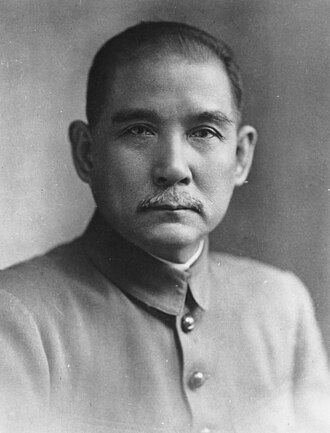
Sun Yat-sen (1866–1925) — Revolutionary Architect of Republican China of Taiwan
1. Whole Life & Rise
Born in Guangdong Province and educated in Hawaii and Hong Kong, Sun developed the Three Principles of the People—nationalism, democracy, and livelihood—through prolonged exile and revolutionary organizing against Qing imperial rule. He coordinated multiple uprisings before the 1911 Revolution, subsequently serving as provisional president of the Republic of China and later establishing the Nationalist political framework that would eventually govern Taiwan. His career was marked by repeated reliance on foreign patronage, factional military alliances, and ideological adaptation to sustain republican aspirations amid warlord fragmentation.
2. In Their Prime
The 1911–1912 revolutionary breakthrough established Sun as the symbolic father of Chinese republicanism, with his political tutelage theory providing constitutional scaffolding for subsequent governance frameworks. His 1924 reorganization of the Nationalist party along Leninist lines and the Whampoa Military Academy foundation created institutional instruments for national unification. Admires emphasize his persistence through repeated failures and his articulation of popular sovereignty principles that transcended personal power accumulation.
3. Defining Turning Point & Legacy
Sun's 1925 death from cancer in Beijing precluded direct governance of a unified republic, leaving his legacy vulnerable to competing interpretations by successors with divergent ideological commitments. His widow Soong Ching-ling's subsequent alignment with the Communist Party and Chiang Kai-shek's authoritarian consolidation introduced contested dimensions to his commemorative inheritance. Historians note the tension between his democratic aspirations and the tutelage-stage authoritarianism that justified extended single-party governance.
4. How Taiwan Treated Sun Yat-sen
National Respect Index: 72/100 — Retains substantial institutional presence and cross-party ceremonial recognition, yet faces generational erosion of automatic reverence amid identity pluralization.
Taiwan maintains Sun as a foundational symbolic figure through the presidential office title, currency imagery, and major memorial hall, though his prominence has diminished in public education and civic discourse relative to indigenous and Taiwan-centered narratives. Opposition movements have periodically challenged his memorialization as emblematic of external imposition, while mainstream institutions preserve ceremonial recognition without enforcing ideological uniformity. The evolving civil-institutional balance permits critical scholarly examination alongside continued formal state honors.
National Psychology & Methodology Signal
Sun's trajectory illustrates Taiwan's navigation between heritage preservation and self-differentiation, as citizens seek symbolic figures enabling both historical continuity and autonomous civic identity. The contested yet sustained commemoration reflects national psychology's tolerance for narrative complexity rather than enforced consensus.
More Iconic National Figures of Taiwan
- Lee Teng-hui (1923–2020) — Democratic Transition Architect and First Popularly Elected President
- Chiu Hao-ting (1915–1942) — Decorated Fighter Ace and Combat Pilot
- Yuan-Tseh Lee (1936–present) — Nobel Laureate in Chemistry and Science Policy Architect
- Chiang Hsun (1947–present) — Essayist, Painter, and Aesthetic Humanist
- Chen Shui-bian (1950–present) — First Non-Kuomintang Directly Elected President
- Wang Chien-ming (1980–present) — Major League Baseball Pitching Phenomenon
- Su Heng-chi (1951–present) — Pioneering Women's Rights Advocate and Legislative Architect
- Teresa Teng (1953–1995) — Transnational Mandarin Popular Music Icon
- Hsiu-lien Annette Lu (1944–present) — Pioneering Feminist Jurist, Vice President, and Democratic Reformer
- Yi-zheng Lin (1916–1942) — Decorated Fighter Ace and Aviation Martyr of the Second Sino-Japanese War